

Why Franchising Could Be Your Path to Business Ownership
How to start franchise ownership involves seven key steps: self-evaluation, research, securing financing, business planning, legal review, signing the agreement, and completing training. The entire process typically takes 90 to 120 days.
Starting a business from scratch is overwhelming. Franchising offers a different path by leveraging an established brand, a proven business model, and a built-in support system. It reduces risk while providing structure, which is why so many entrepreneurs choose this route.
The franchise industry is a powerhouse, generating over $2.1 trillion annually and employing 18 million Americans. Nearly 4% of all U.S. small businesses are franchises, spanning industries from fast food and fitness to home services and education.
Franchising isn’t for everyone. It requires following a proven system rather than creating your own. You’ll pay initial fees and ongoing royalties and must adhere to the franchisor’s standards. The trade-off is skipping years of trial and error by starting with a validated roadmap.
This guide walks you through everything you need to know about how to start franchise ownership. I’m Max Emma, a Certified Franchise Executive and founder of Main Entrance Franchise Consulting. Having been both a franchisor and a consultant, I offer a unique perspective on what makes franchise relationships succeed.
Is a Franchise the Right Business Model for You?

Before exploring franchise opportunities, it’s crucial to assess if this business model aligns with your personal goals, financial capacity, and skills. Are you looking for a proven path with established guidelines, or do you crave complete creative freedom?
Franchising is often described as “being in business for yourself, but not by yourself.” You gain the independence of ownership with the support of a larger brand. For many, this provides security and a higher likelihood of success. A franchisee mindset is key; you must be coachable and willing to follow a system. If you prefer to make every decision independently, franchising might feel restrictive. Successful franchisees possess strong leadership skills, resilience, and an openness to coaching.
We help our clients find The 4 Freedoms That Motivate Successful Franchise Owners, which often include financial independence, time flexibility, purpose, and strong relationships.
Benefits of Franchising:
- Established Brand Recognition: Start with a recognizable name and existing customer base.
- Proven Business Model: A tested system minimizes trial and error.
- Comprehensive Training and Support: Receive initial and ongoing guidance from the franchisor.
- Lower Risk: Franchises generally have a higher success rate than independent startups.
- Purchasing Power: Benefit from bulk purchasing agreements for lower costs.
Disadvantages of Franchising:
- Less Control: You must adhere to the franchisor’s rules and brand standards.
- Ongoing Fees: You’ll pay ongoing royalty fees (typically 3% to 6% of gross sales) and advertising contributions.
- Restricted Growth: Growth may be limited by territory agreements.
- Lengthy Contracts: Agreements are often long-term with specific renewal terms.
- Dependence on Franchisor Performance: Your success is tied to the franchisor’s brand health.
Here’s a quick comparison:
| Feature | Starting from Scratch | Buying a Franchise |
|---|---|---|
| Concept | Develop your own unique idea | Use a proven, existing business model |
| Brand | Build brand recognition from zero | Leverage established brand awareness and reputation |
| Systems | Create all operational systems and processes | Follow a pre-defined, tested operational playbook |
| Support | Solely responsible for all aspects | Receive initial training and ongoing support |
| Risk | Higher risk of failure, more trial and error | Lower risk due to proven model and support |
| Control | Complete creative and operational freedom | Adhere to franchisor’s rules and guidelines |
| Cost | Varies, but often includes significant development | Initial franchise fee + ongoing royalties/fees |
| Timeline | Potentially longer to achieve profitability | Faster path to market and potential profitability |
Purchasing a franchise is an investment, not a guarantee of success. By being honest about your goals and financial capacity, you can make an informed decision.
The Essential Steps for How to Start a Franchise

Understanding how to start franchise ownership is manageable when broken into steps. The process typically takes 90 to 120 days, allowing for thorough due diligence—the foundation of a successful venture.
Step 1: Research and Identify Suitable Opportunities
Finding the right franchise means matching the opportunity to your interests, skills, and financial capacity. Your enthusiasm will be crucial in the early days. Use online resources like FranchiseDirect, the International Franchise Association’s Franchise Opportunities database, and Entrepreneur.com’s Franchise 500 rankings to start your search.
As you evaluate opportunities, focus on market demand, competition, brand reputation, and training and support. Most importantly, conduct validation calls with current franchisees. Their real-world experiences provide insights you won’t find in marketing materials. We help our clients prepare the right questions for these crucial conversations.
Step 2: Understand the Costs and Secure Financing
Understanding the financial commitment is critical. The initial investment can range from $10,000 to over $5 million, with most falling in the $100,000 to $300,000 range.
Key costs include:
- Initial Franchise Fee: The upfront cost to use the brand and systems.
- Real Estate and Build-Out: Varies significantly by industry and location.
- Equipment and Inventory: The tools and stock needed to operate.
- Working Capital: A crucial cash cushion to cover operating expenses until your business is self-sustaining.
Ongoing fees include royalty fees (typically 3-6% of gross sales) and contributions to a national advertising fund.
Financing options include traditional bank loans, SBA loans, franchisor financing, and retirement-based lending (like 401k/IRA rollovers). Our team at Main Entrance Franchise Consulting can help you explore which options fit your budget.
Step 3: Develop a Solid Business Plan and Set Goals
Your business plan is your strategic roadmap. A comprehensive plan includes an executive summary, company description, market analysis, marketing strategy, operational plan, management team overview, and financial projections. Use data from the franchisor and your own research to create realistic forecasts.
Set SMART goals—Specific, Measurable, Achievable, Relevant, and Time-bound—to create clear targets and track your progress. For help developing this document, explore our More info about our Franchise Buying services.
Step 4: Steer the Legal Landscape: The FDD and Agreements
This is arguably the most important step. Hire a specialized franchise lawyer to steer the complex legal landscape and protect your investment.
The Franchise Disclosure Document (FDD) is a comprehensive document franchisors must provide at least 14 days before you sign or pay anything. Use this time to review it thoroughly with your attorney. The FDD contains 23 items covering the franchisor’s history, fees, rules, and financial health.
Pay close attention to:
- Items 5, 6, & 7: All initial and ongoing costs.
- Items 8 & 12: Restrictions on suppliers and your territory.
- Item 19: Financial performance representations (if provided).
- Item 20: Data on franchisee turnover and system growth.
- Item 21: The franchisor’s audited financial statements.
Additionally, be aware of Franchise registration states, which have extra regulatory requirements. Legal due diligence is your best protection against future problems.
From Franchisor to Franchisee: Understanding Both Sides

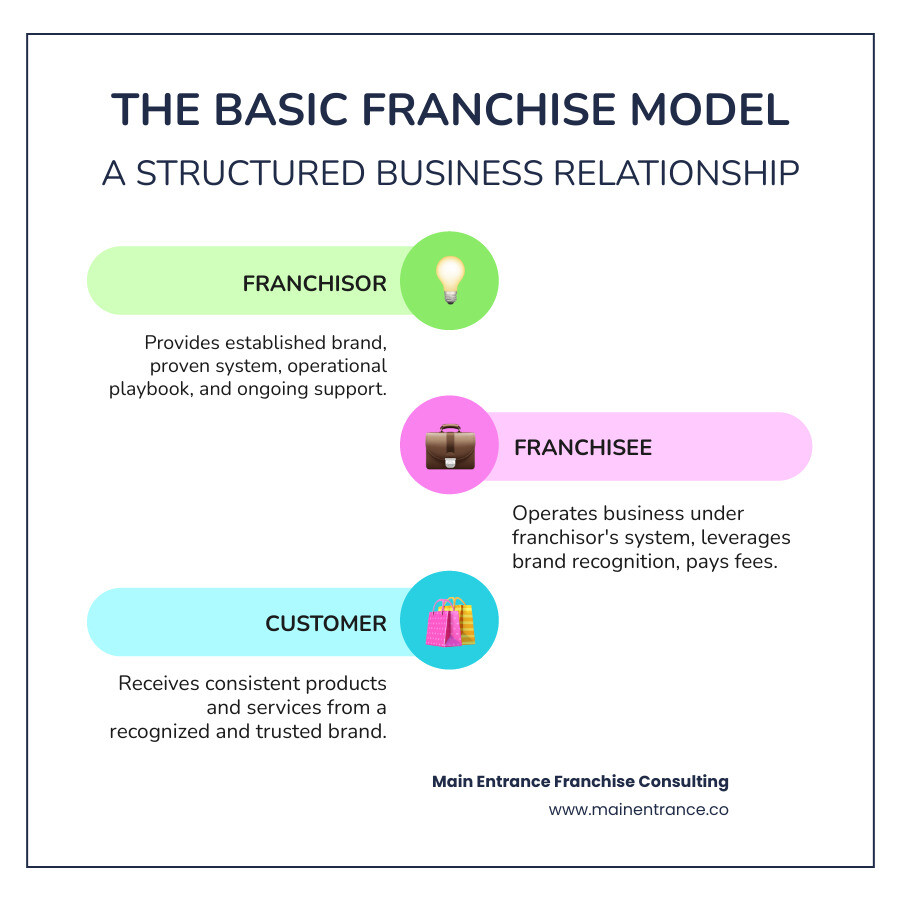
Understanding how to start franchise ownership means appreciating both sides of the relationship. A successful partnership requires mutual understanding of each party’s motivations and challenges.
For business owners, franchising offers a path to rapid expansion by leveraging franchisees’ capital. This scalability is powerful, provided the business is profitable, replicable, and unique. The cost to franchise a business typically ranges from $18,500 to $84,500. It’s important to distinguish this from licensing; if you license a trademark, charge a fee, and exert control, you are legally a franchise and must comply with franchise laws. If you’re considering this path, our More info about Franchise Development services can help.
Key considerations for how to start a franchise as a franchisee
As a franchisee, you are buying a proven playbook that comes with structure and support, but also boundaries.
- Franchisor Control: The franchisor influences site selection, store design, product offerings, and daily operations to protect brand consistency.
- Brand Standards: These are requirements, not suggestions. You’ll use approved suppliers and follow prescribed marketing and quality guidelines.
- Franchise Agreement: This legal document dictates the term length and post-termination covenants, which may restrict you from opening a competing business after your term ends.
- Training and Support: Great franchisors provide comprehensive initial training and robust ongoing support. Evaluate this by talking to current franchisees about their actual experiences.
Key considerations for how to start a franchise as a franchisor
If you’re considering franchising your business, your role shifts from operator to teacher, salesperson, and support system.
- Capital and Growth: Franchisees’ investments fund rapid expansion that would be difficult to achieve with company-owned stores alone.
- Reduced Control: You must accept that you can’t control every daily decision. You set the system, but franchisees execute it.
- Support Obligations: Your success depends on your franchisees’ success. You must provide robust training, operational systems, and ongoing support.
- Legal Compliance: You must prepare and maintain the FDD and steer complex federal and state franchise laws.
- Sales and Marketing: You need a solid plan to find and attract qualified franchisee candidates.
Launch and Grow: Strategies for Long-Term Success

Opening your doors is just the beginning. Sustaining growth and achieving operational excellence are what separate franchisees who merely survive from those who truly flourish.
Choosing the right location is critical, especially for retail businesses. Consider your target demographics, accessibility for customers, and visibility from main roads. Also, be sure to understand local zoning laws and permit requirements, which can impact your timeline and costs.
Building your team is equally vital. Your employees are the face of your franchise. Hiring and retaining the right employees requires a thoughtful recruitment strategy and a positive work environment. Successful franchisees invest in their people through thorough training, clear communication, and a culture where employees feel valued.
New franchisees often face common challenges. Under-capitalization is a primary one; many underestimate how long it takes to reach profitability. Ensure your financial plan includes enough working capital to cover several months of expenses. Staffing issues, such as finding reliable employees and high turnover, can also cripple operations. Build your hiring pipeline early and invest in competitive compensation and training.
Let’s also clear up some dangerous misconceptions about how to start franchise ownership.
First, franchising is not a passive income opportunity. Most successful franchisees are hands-on, especially in the first few years, learning every aspect of the business. As Chick-fil-A states, it’s about investing your time to build a culture.
Second, franchise ownership does not come with guaranteed success. While franchises have higher success rates than startups, the FTC cautions that there’s no guarantee. Your agreement promises a system and support, not profits. Your commitment, hard work, and adherence to the playbook are what drive success.
Exploring Franchise Options: From Low-Cost to Big Brands
One of the most common questions we hear is, “How much money do I really need to start a franchise?” The franchise landscape offers opportunities at nearly every investment level, from under $15,000 to several million dollars.
Low-Cost Franchises: High Returns Without Breaking the Bank
You don’t need hundreds of thousands of dollars to begin your journey with how to start franchise ownership. Many successful franchises can be launched for $15,000 or less, often in service industries where you can operate from home with minimal overhead. These opportunities include travel agencies, consulting, mobile businesses, and commercial cleaning.
Examples of low-cost franchises include:
- Dream Vacations (around $9,800): A home-based travel agency.
- Complete Weddings + Events ($10,000): Offering DJ, photography, and other event services.
- Cruise Planners ($10,995): Another popular home-based travel franchise.
- Help-U-Sell Real Estate ($15,000): A fee-for-service real estate model.
- Image One ($15,000): A commercial cleaning service, a recession-resistant industry.
With these investments, you’re not just buying a name; you’re buying a roadmap that includes comprehensive training, operational systems, and ongoing support.
High-Investment Brands: Instant Recognition, Bigger Commitment
On the other end of the spectrum are household names like Taco Bell or McDonald’s. These require significant financial backing, often at least $750,000 in liquid assets. A KFC franchise may require a net worth of at least $1.5 million. These figures cover the total investment, including real estate, equipment, and working capital.
Chick-fil-A is a unique case. The initial fee is only $10,000, but the selection process is competitive. They require a full-time, hands-on commitment and expect operators to divest from other businesses. It’s a life investment, not a passive income stream, reminding us that “low cost” doesn’t always mean “easy entry.”
Finding Your Perfect Fit
The beauty of franchising is its variety. Opportunities exist for every budget and interest. The key is matching your financial capacity, skills, and goals with the right franchise. Our team at Main Entrance Franchise Consulting helps you steer this landscape, providing expert guidance with no upfront costs to you.
Conclusion
We’ve walked through the comprehensive process of how to start franchise ownership, from self-assessment and research to legal review and launch planning. If it feels like a lot, that’s normal.
Remember this: franchising is a journey that requires thorough due diligence. The typical 90 to 120-day timeline exists to ensure you make informed, confident decisions about this major life investment.
The power of franchising lies in its structure. You are your own boss, but you’re not alone. You start with a proven business model, a recognizable brand, and ongoing support. It’s why the franchise industry is a $2.1 trillion economic force.
Success is not guaranteed, but it is achievable. It requires your commitment, hard work, and willingness to follow the system. It’s active business ownership with the advantage of a tested playbook.
Navigating thousands of opportunities, complex legal documents, and financing options can be overwhelming. That’s why we founded Main Entrance Franchise Consulting. Having built a franchise system and guided hundreds of entrepreneurs, we understand the complexities from both sides. We focus on your goals, and because we work on flexible compensation models with no upfront costs, we only succeed when you do.
Whether you’re exploring local opportunities or are an international entrepreneur interested in our E-2 Visa Franchise services, we’re here to simplify the process.
Your journey to franchise ownership starts with a single conversation. Let’s make it count.