

Why Getting Your Franchisee Onboarding Process Right Is Make-or-Break
The franchisee onboarding process can determine whether your new franchise partners thrive or struggle in their first crucial months. Research shows that franchises with structured onboarding see 82% higher franchisee retention, while properly onboarded franchisees are 67% more likely to meet first-year revenue targets.
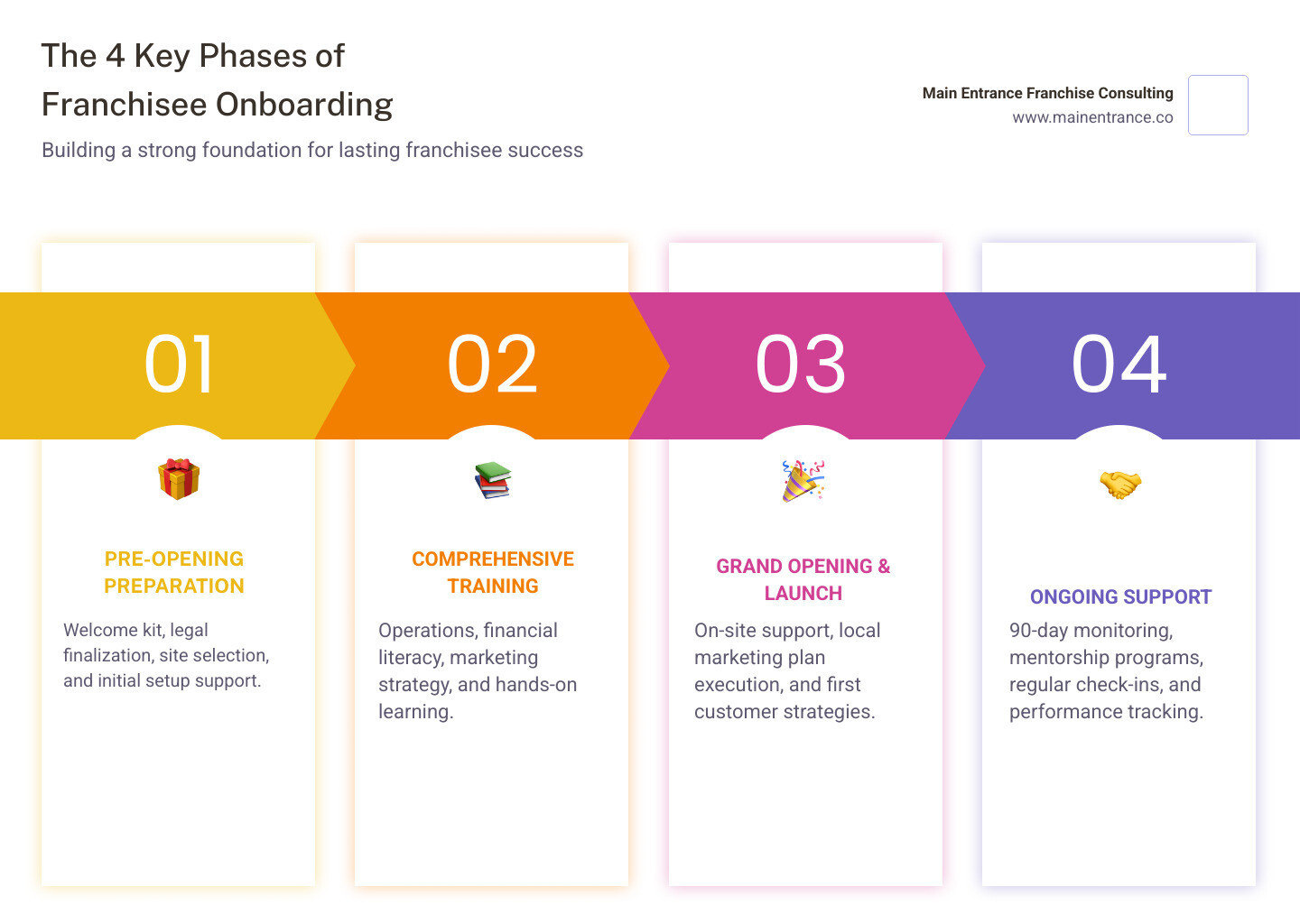
Essential phases of a successful franchisee onboarding process:
- Pre-Opening Preparation – Welcome kit, legal finalization, site selection support
- Comprehensive Training – Operations, financial literacy, marketing strategy
- Grand Opening & Launch – On-site support, local marketing, first customer acquisition
- Ongoing Support – 90-day monitoring, mentorship, performance tracking
The stakes couldn’t be higher. As one franchise expert noted: “The fate of a new franchise is often sealed within the first 90 days.” Companies with standardized onboarding processes experience 54% greater new hire productivity and 50% better retention rates.
Yet many franchisors still treat onboarding as a checkbox exercise rather than the strategic investment it should be. The difference between a rushed, generic approach and a thoughtful, structured process can mean the difference between a thriving franchisee who becomes a system champion and one who struggles to break even.
I’m Max Emma, a Certified Franchise Executive who has built and scaled multiple businesses including BooXkeeping Franchise, giving me experience with the franchisee onboarding process from both sides. Through Main Entrance Franchise Consulting, I’ve helped over 100 franchise brands optimize their onboarding systems to drive franchisee success and system-wide growth.
Why a Structured Onboarding Process is Your Franchise’s Secret Weapon
Think of your franchisee onboarding process as the blueprint for a successful partnership. Without it, you’re handing someone the keys to your brand and hoping for the best. A structured process is essential for franchise success, setting up both your franchisees and your entire system for long-term wins.
When you get it right, the results are clear: franchisee retention jumps by 82%, and new partners are 67% more likely to hit their first-year revenue targets. A well-designed franchisee onboarding process also ensures brand consistency and drives customer satisfaction across all locations.
The operational efficiency gains are impressive, with companies experiencing 54% greater new hire productivity through standard onboarding. This structure gives franchisees the tools and knowledge they need to succeed, helping them achieve The 4 Freedoms That Motivate Successful Franchise Owners.
The Undeniable ROI of Effective Onboarding
The return on investment for effective onboarding is remarkable. Organizations with structured onboarding saw a 60% improvement in revenue. Properly prepared franchisees don’t just survive; they thrive, leading to:
- Higher Profitability: Well-trained franchisees make fewer costly mistakes and build stronger local businesses.
- Reduced Support Costs: Confident franchisees require less hand-holding, with training-related support calls dropping by an average of 38% in the first year.
- Faster Time-to-Profitability: Comprehensive onboarding helps franchisees reach their break-even point 31% faster.
- Increased Franchisee Engagement: Engaged franchisees are 18 times more committed, becoming brand champions who contribute to system scalability.
Setting Expectations: The Foundation of a Strong Partnership
Selling a franchise is the starting gun, not the finish line. The real work is building a partnership based on clear expectations.
Clarity from day one prevents future headaches. This means defining roles, outlining responsibilities, and being transparent about both opportunities and challenges. When franchisees know what to expect from you and what’s expected of them, you build trust and prevent misunderstandings.
This foundation transforms a transaction into a true partnership, allowing both sides to focus on growth instead of conflict. Learn how we help create these strong partnerships through our franchise consulting services.
The Ultimate Franchisee Onboarding Process Checklist: From Signing to Success
Creating a franchisee onboarding process that transforms an agreement into a thriving partnership is your key to success. Think of it as your franchisee’s GPS, with every turn mapped out and every milestone clearly marked.

The most successful franchise systems break their franchisee onboarding process into four distinct phases. This chronological approach ensures nothing falls through the cracks and creates natural checkpoints for progress and accountability.
Phase 1: Pre-Opening Preparation and Support
This phase turns the agreement into a tangible business, typically lasting 4-8 weeks. It’s about guiding the new franchisee through the complexities of setup.
- Welcome Kit: Sets the tone with a welcome letter, key contacts, a timeline, and access to your franchisee portal.
- Legal Document Finalization: Guide franchisees through entity formation, business registration, and obtaining licenses and permits.
- Financial Setup Guidance: Help establish relationships with lenders, set up accounting systems, and clarify initial capital requirements to prevent cash flow issues.
- Site Selection Assistance: Provide your expertise on demographics and traffic patterns to help with lease negotiations and avoid costly location mistakes.
- Build-Out Compliance: Ensure brand standards are met through plan reviews, contractor recommendations, and progress checks.
- Vendor Introductions: Connect franchisees with approved suppliers for equipment and inventory, leveraging your system’s buying power.
An experienced franchise consultant can streamline this phase and help avoid delays.
Phase 2: Comprehensive Training for a Strong Foundation
Training is the heart of the franchisee onboarding process, changing an owner into a competent operator. Effective programs span 6-12 weeks and use multiple learning methods.
- Operations Manual: Make this “bible” for daily operations accessible through a searchable digital platform with videos and regular updates.
- Blended Learning Approach: Combine self-paced e-learning modules for foundational knowledge with intensive classroom or virtual training for complex topics like sales, finance, and HR.
- Hands-on Training: Allow franchisees to apply their knowledge in a real-world setting, like a corporate training center or a high-performing unit.
- Financial Literacy Training: This is critical. Franchisees with strong financial training are 58% more likely to meet revenue projections. Cover cash flow, KPIs, cost control, and reading financial statements.
- Marketing Strategy Development: Teach franchisees how to execute national and local marketing plans, use digital tools, and prepare for their grand opening.
- Customize for Learning Styles: Incorporate visual, auditory, and kinesthetic elements to cater to different learning preferences.
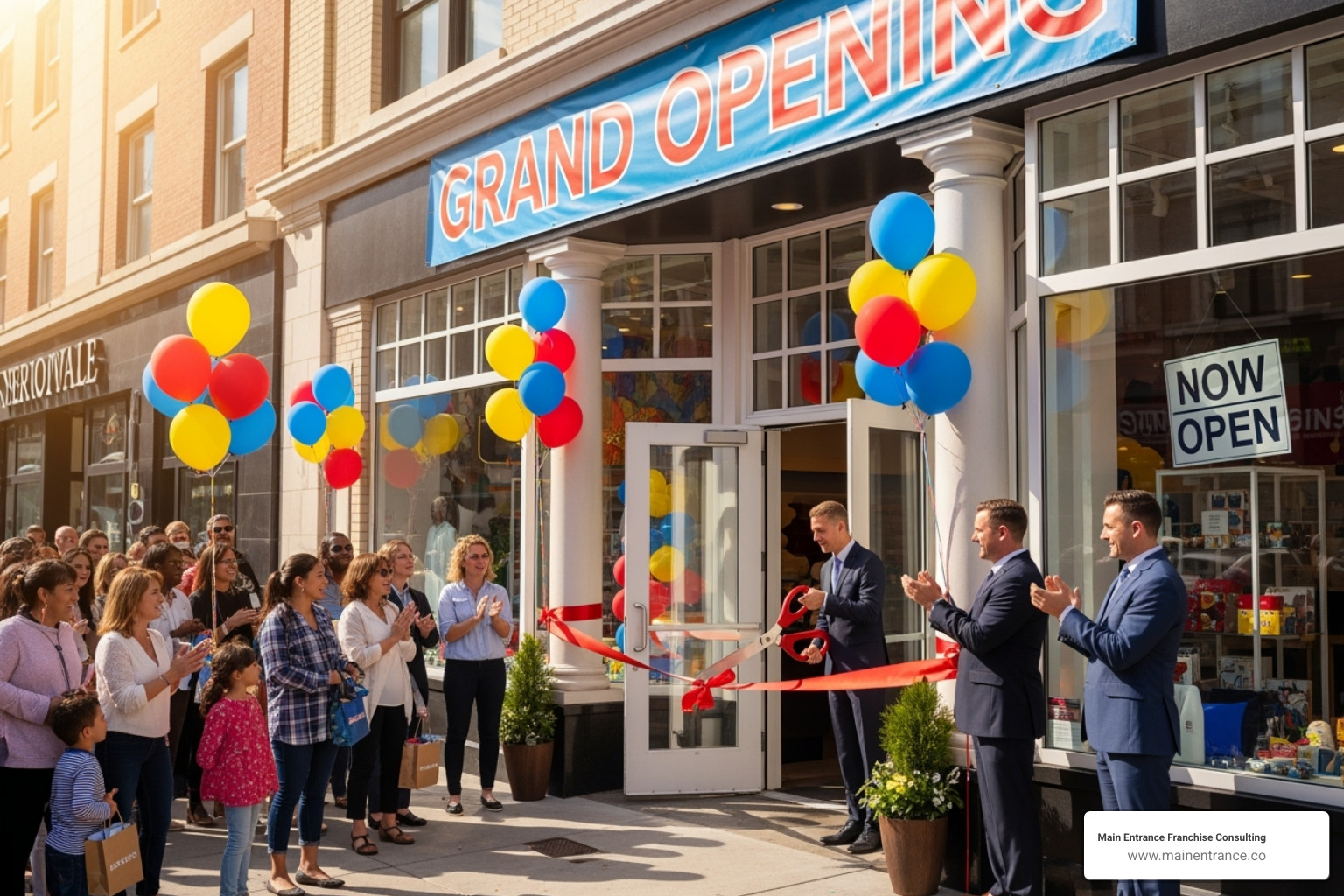
Phase 3: The Grand Opening and Initial Launch
Launch day is a major milestone. This phase is about creating momentum and ensuring your franchisee feels supported as they open their doors.
- Pre-Launch Marketing Plan: Generate buzz weeks before opening with social media templates, ad materials, and PR guidance.
- Local Media Outreach: Provide press release templates and talking points to help franchisees secure valuable free publicity.
- On-Site Support Team: Have an experienced corporate team member present during the first few days to troubleshoot, reinforce training, and provide support.
- First Customer Strategies: Train franchisees on creating positive initial experiences to drive repeat business and referrals.
- Initial Performance Review: Within the first week, review performance to celebrate successes, identify quick wins, and address immediate concerns.
Phase 4: Ongoing Support in the Crucial Franchisee Onboarding Process
The partnership truly begins on opening day. This phase of the franchisee onboarding process proves your long-term commitment to their success.
- 90-Day Support Plan: Provide structure during the crucial first months with regular check-ins, KPI monitoring, and targeted coaching.
- Mentorship Programs: Pair new franchisees with successful veterans for invaluable peer support and practical advice.
- Regular Check-ins: A dedicated franchise business consultant should hold regular calls to problem-solve, celebrate wins, and create accountability.
- Performance Monitoring: Track key metrics like sales and customer satisfaction to identify trends and provide data-driven feedback.
- Feedback Loops: Create channels for new franchisees to provide input. Their fresh perspective can help improve your entire system. 78% of brands with positive franchisee relationships have a franchise advisory council, which formalizes this process.
This long-term commitment to support is what separates great franchise systems from the rest.
Leveraging Technology and Financial Systems for a Seamless Experience
Technology is the backbone of a modern franchise operation. Getting the tech and financial systems right during the franchisee onboarding process makes everything smoother and more efficient.
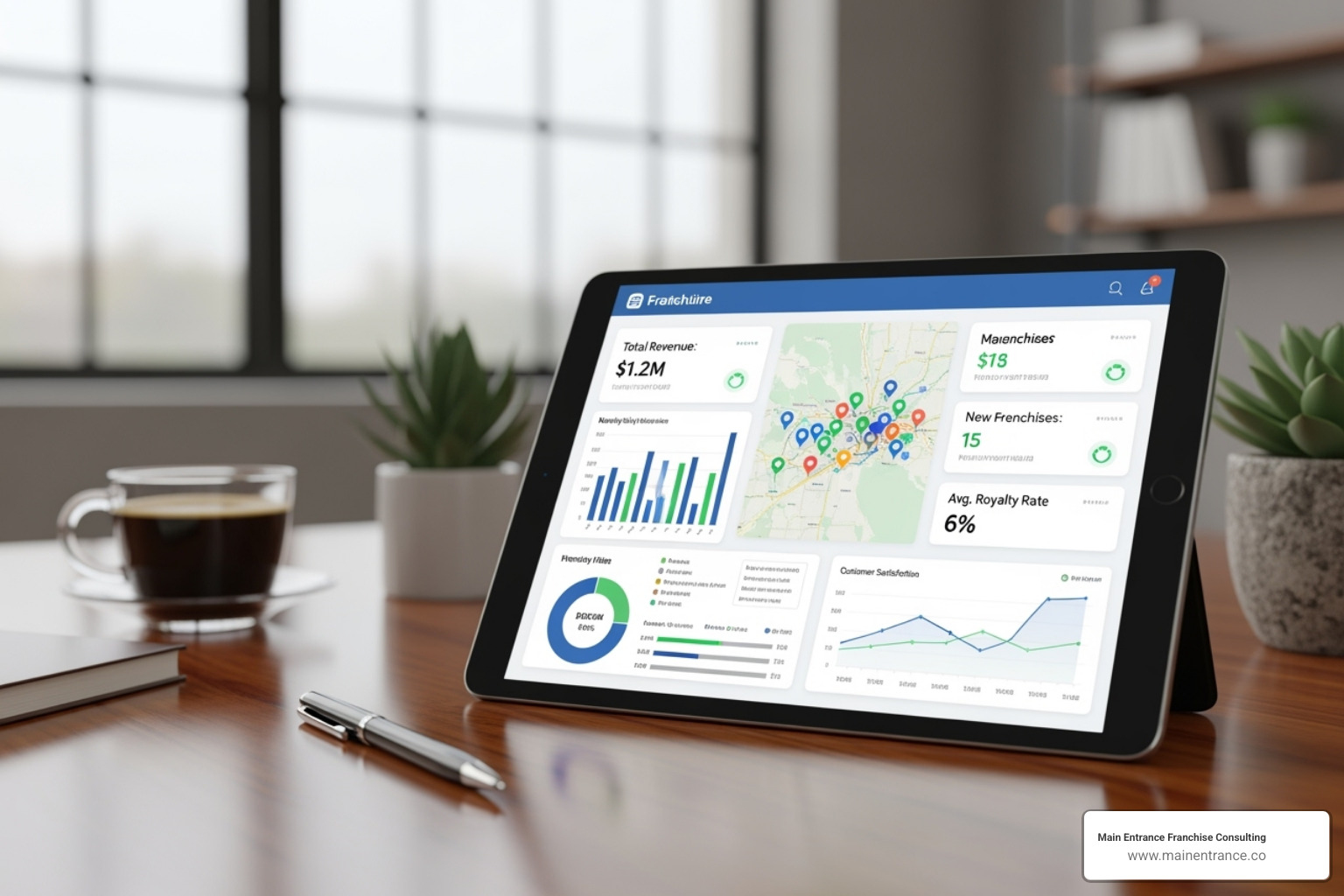
The right technology transforms onboarding from a manual headache into a streamlined experience. It automates repetitive tasks, centralizes communication, and provides data-driven insights. When new franchisees can access everything in one place, complete training on their schedule, and get real-time feedback, they feel more confident and supported.
The Tech Stack That Powers Success
A solid tech stack is essential for a bulletproof franchisee onboarding process.
- Franchise Management Software (FMS): Your command center for checklists, documents, and communication.
- Learning Management System (LMS): Enables self-paced, trackable online training that franchisees can access anytime.
- Integrated POS Systems: Automates sales tracking, inventory, and royalty calculations, eliminating manual data entry.
- Communication Portals: Fosters community by connecting new franchisees with peers and mentors for support.
- Digital Checklists and Workflow Automation: Ensures consistency and allows for real-time progress tracking. Franchisees complete onboarding 35% faster with these tools.
Financial Foundations for First-Year Success
While operational training is important, robust financial setup and training is the most critical factor for first-year success. Many new franchisees lack a financial background, so providing a strong foundation is essential.
- Standardized Chart of Accounts: Using a consistent structure (e.g., in QuickBooks Enterprise for Franchises) allows for easy performance benchmarking.
- Cash Flow Planning: Provide templates and training to help franchisees create realistic 12-18 month projections, preparing them for financial ups and downs.
- Automated Royalty and Fee Collection: Integrated systems eliminate friction by automating payments, preventing confusion and delays.
- KPI Dashboards: Give franchisees real-time access to key metrics, allowing them to track performance against system benchmarks and make timely adjustments.
Most importantly, provide comprehensive financial literacy training. Teach franchisees to read financial statements, manage expenses, and understand profitability. Franchisees who receive robust financial training are 58% more likely to meet revenue projections. Getting the financial foundation right during the franchisee onboarding process builds the confidence and competence needed for long-term success.
Measuring Success and Avoiding Common Pitfalls
Even the best franchisee onboarding process is useless without measuring its impact. Successful franchise systems treat onboarding as a living process, constantly asking, “How can we do better?” This commitment to continuous improvement is key.
Data analysis helps you track the right metrics to spot problems early and replicate successes. However, the numbers only tell part of the story. The real magic happens when you combine hard data with genuine care, proactive problem-solving, and learning from both victories and mistakes.
Key KPIs for Your Franchisee Onboarding Process
Tracking the right KPIs for your franchisee onboarding process provides an early warning system for success or struggle.
- Time-to-Profitability: This golden metric shows how quickly new units become profitable, reflecting the effectiveness of your training and launch support. Integrated tech can speed this up by 31%.
- First-Year Revenue vs. Projections: This reveals if you’re setting realistic expectations. Consistently missing targets may signal a need to adjust projections or support.
- Franchisee Satisfaction Score (eNPS): This measures how supported new owners feel. A positive onboarding experience makes franchisees 18 times more committed.
- Support Ticket Volume: A high volume of questions in the first year can indicate gaps in your training. A 38% decrease in support calls is a sign of effective onboarding.
- Franchisee Retention Rate: The ultimate measure. Systems with structured onboarding see 92% of new franchises still operational after two years, compared to the 85% industry average.
Working with a Certified Franchise Executive (CFE) ensures you’re tracking and interpreting these metrics correctly to drive system improvements.
Common Mistakes That Derail New Franchisees
After years in the industry, I’ve seen the same preventable mistakes derail new franchisees. Knowing what to watch for is the first step to avoiding them.
- Information Overload: Trying to teach everything at once is like making someone drink from a fire hose. Instead, use a phased learning approach that builds knowledge and confidence step-by-step.
- One-Size-Fits-All Approach: Franchisees have diverse backgrounds and learning styles. Customizing the onboarding experience to the individual significantly increases success rates.
- Neglecting Financial Training: This is a critical error. A franchisee can master operations but fail without understanding their numbers. Robust financial training makes them 58% more likely to meet revenue projections.
- Premature Support Cutoff: The job isn’t done at the grand opening. The first 90 days post-launch are when franchisees need the most support as they face real-world challenges.
- Treating Technology as an Afterthought: Poor or late tech integration creates friction and inefficiency. Integrating platforms from the start reduces operational errors by 45% in the first quarter.
Avoiding these common pitfalls is key to designing a franchisee onboarding process that sets every new owner up for success.
Frequently Asked Questions about the Franchisee Onboarding Process
After working with hundreds of franchise brands, I’ve noticed the same questions come up again and again about the franchisee onboarding process. Let me share the answers that matter most to your success.
How long should a franchisee onboarding program take?
There’s no single magic number, but a proven framework exists. A comprehensive franchisee onboarding process typically involves 6-12 weeks of intensive pre-opening training and a structured 90-day to 6-month post-opening support plan.
The pre-opening phase covers operations, marketing, and finance. However, onboarding doesn’t end when the doors open. The post-opening support period is critical for guiding franchisees through their first real-world challenges. Rushing this process to save time often leads to struggling franchisees and higher costs in the long run.
What is the most critical factor for first-year franchisee success?
While operational training is vital, robust financial setup and training, supported by seamlessly integrated technology, has the strongest correlation with first-year success.
A franchisee can know operations perfectly, but without understanding their financials, they’re flying blind. Comprehensive financial training goes beyond software; it’s about understanding the levers that drive profitability. This, combined with integrated technology that automates tasks and reduces paperwork, allows franchisees to focus on growth and is key to hitting revenue targets.
How can franchisors build a strong community from day one?
Community building starts the moment a franchisee signs their agreement. Fostering community during onboarding by introducing new owners to mentors, creating peer groups, and facilitating communication through a central portal.
- Mentorship Programs: Pair new franchisees with seasoned operators for invaluable, real-world advice and support.
- Peer Connections: Group new franchisees together during training to help them form lasting bonds and support networks.
- Technology Platforms: Use a central portal or app to create a scalable space where franchisees can ask questions, share wins, and troubleshoot challenges.
Franchisees who feel connected to a community are more likely to succeed, stay in the system, and become brand advocates. The goal is to welcome them into a business family where everyone wins together.
Conclusion
The franchisee onboarding process is far more than checking boxes and completing paperwork. It’s the cornerstone that determines whether your franchise system will thrive or merely survive. Think of it as planting seeds in fertile ground – with the right care and attention during those crucial early months, you’ll cultivate a network of engaged partners who become champions of your brand.
Throughout this guide, we’ve explored how a strategic, comprehensive approach to onboarding transforms eager new owners into confident operators. The numbers don’t lie: franchises with structured onboarding see 82% higher retention rates and their franchisees are 67% more likely to meet first-year revenue targets. That’s not just good for individual unit performance – it’s changeal for your entire system’s growth and profitability.
The investment you make in perfecting your franchisee onboarding process pays dividends far beyond the initial training period. When you provide robust financial training, integrate technology seamlessly, and maintain ongoing support through those critical first 90 days, you’re building a foundation for scalable growth. Your support team spends less time putting out fires and more time focusing on strategic initiatives. Your franchisees become advocates who attract quality prospects through their success stories.
But here’s what I’ve learned after working with over 100 franchise brands: the best onboarding programs aren’t just about what you teach – they’re about how you make people feel. When new franchisees feel supported, valued, and confident in their decision to join your system, that emotional connection becomes the bedrock of a lasting partnership.
At Main Entrance Franchise Consulting, we’ve seen how the right onboarding approach can transform struggling systems into thriving networks. We believe that when your franchisees succeed, everyone wins. The franchisee builds the business of their dreams, customers receive exceptional service, and you create a sustainable, profitable system that attracts top-tier prospects.
Ready to take your franchise system to the next level? Let’s work together to develop a winning franchise system with our expert guidance. Because every great franchise journey begins with getting those first 90 days absolutely right.