

Why Franchisee Satisfaction Surveys Are Critical for Network Success
A franchisee satisfaction survey is the most powerful tool a franchisor has to measure network health and identify opportunities for improvement. These surveys systematically collect feedback from franchisees on key areas like training, support, leadership, and financial performance.
Quick Answer – What is a Franchisee Satisfaction Survey:
- Definition: A structured feedback tool that measures franchisee satisfaction across multiple dimensions.
- Purpose: Identify strengths, weaknesses, and improvement opportunities in your franchise system.
- Key Areas: Training & support, leadership, financial opportunity, and franchisee community.
- Frequency: Typically conducted annually, with optional pulse surveys.
- Benefits: Improved retention, stronger validation, increased profitability, and network growth.
Research shows that brands in the top quartile of satisfaction significantly outperform bottom-quartile brands in unit growth, royalty revenue, and franchisee income. This data proves what successful franchisors already know: happy franchisees drive business results.
The challenge isn’t whether to survey your franchisees, but how to do it effectively. Many surveys become what one industry expert calls “busy work with few results.” With thousands of franchise brands now being surveyed by leading research firms, franchisee satisfaction has become the industry standard for measuring franchise health.
I’m Max Emma, a Certified Franchise Executive and founder of Main Entrance Franchise Consulting. I’ve helped over 100 franchise brands implement effective franchisee satisfaction survey programs. My experience has shown that the most successful systems use this data not just to measure performance, but to drive continuous improvement across their entire network.
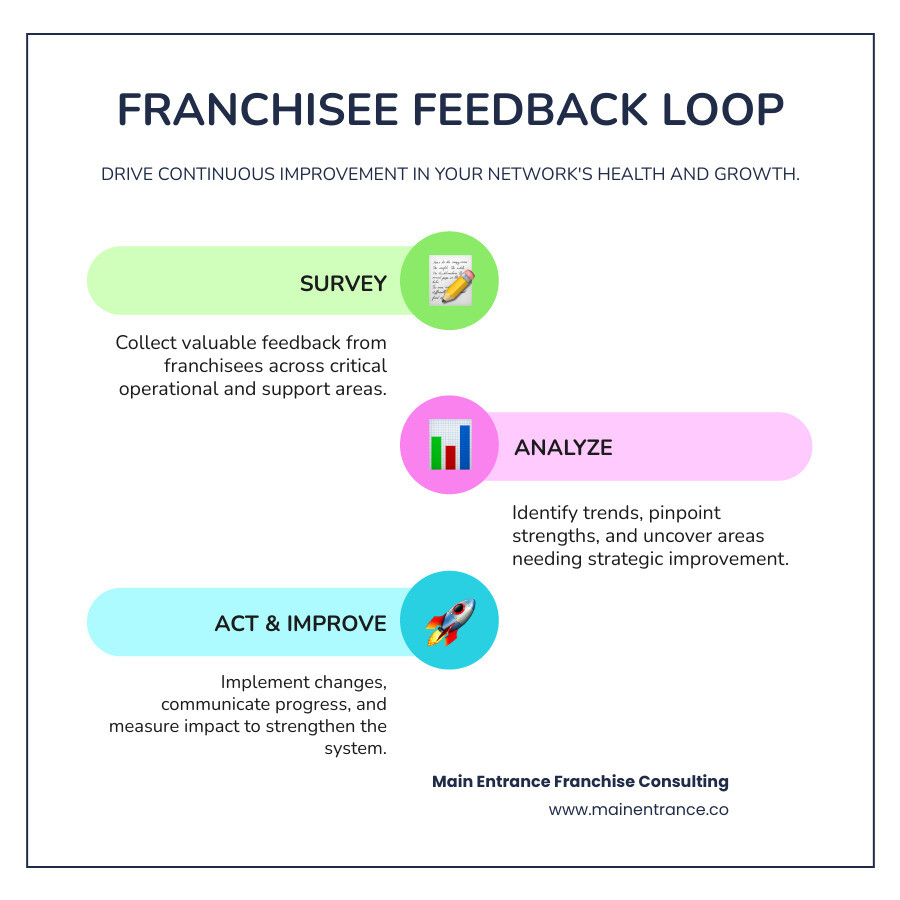
Why Franchisee Satisfaction is the Bedrock of Your Network’s Success
Think of your franchise system as a garden. Each franchisee is a plant that needs the right conditions to thrive. When you nurture that environment, the entire garden flourishes. That’s what happens when you prioritize franchisee satisfaction – you create the foundation for sustainable growth.

This isn’t just feel-good business speak. Academic studies on franchisee satisfaction show that “franchisees’ satisfaction is key to a franchise network’s continuance over the years” (see peer-reviewed research). When franchisees are genuinely happy, network continuity improves because they stick around longer, saving you recruitment and training costs. They become your biggest champions, making brand validation for candidates effortless. This engagement leads to improved unit-level economics and creates a cycle where success breeds more success, leading to increased multi-unit growth.
What drives this satisfaction? Often, it’s the 4 freedoms that motivate successful franchise owners – financial, time, relationship, and purpose freedom. When franchisees feel they’re achieving these goals, satisfaction soars. For more on this, see The 4 Freedoms That Motivate Successful Franchise Owners.
The Impact on Growth and Profitability
Franchisee satisfaction directly impacts your bottom line. When franchisees are thriving, they don’t just maintain operations—they expand. They buy more territories and become walking testimonials for your brand. This better franchisee performance happens naturally when people feel supported. They implement marketing programs more enthusiastically and deliver better customer experiences. This translates directly into increased royalty revenue for your system. It’s not about squeezing more from operators; it’s about helping successful ones become even more so. Positive validation calls become your secret weapon in franchise development, and attracting top-tier candidates becomes easier when your reputation for franchisee satisfaction grows.
The Role of Transparency and Communication
Trust is the backbone of any successful franchise relationship. Building trust starts with genuinely wanting to hear what your franchisees have to say, even when it’s difficult. When you conduct a franchisee satisfaction survey and openly share the results, you demonstrate that feedback matters more than ego. Open feedback channels should extend beyond formal surveys to prevent small issues from becoming major problems. Sharing results transforms the survey from a data-gathering exercise into a collaborative improvement process. When you involve franchisees in collaborative problem-solving, the solutions are better and the buy-in is stronger. This approach naturally fosters a positive culture where franchisees feel valued, respected, and part of something bigger. This creates a virtuous cycle: happy franchisees perform better, strengthening the system and attracting better candidates, which creates more success.
Key Dimensions of Franchisee Satisfaction to Measure
A franchisee satisfaction survey is a comprehensive health checkup for your system. You can’t measure satisfaction with one simple question. A comprehensive satisfaction index has become the gold standard, examining critical areas that shape the franchisee experience.
At Main Entrance Consulting, we’ve seen how mastering these dimensions creates thriving networks. Let’s explore the key areas.
Training, Support, and Operations
This is where the rubber meets the road. Franchisees expect a proven system and robust support. Key measures include:
- Initial and ongoing support: Did training prepare them for success? Is the corporate team responsive?
- Marketing and advertising: Are brand-level campaigns driving customers to their doors?
- Technology systems: Clunky or outdated software is a common pain point that shows up clearly in satisfaction scores.
- Operational procedures and quality: Are the systems and products/services effective and high-quality?
For example, in one survey for The Joint, franchisees rated most operational areas favorably but highlighted technology as an area for improvement (3.4/5.0).
Leadership, Culture, and Core Values
Your leadership team sets the tone for the entire franchise family. Franchisees look to you for vision, guidance, and ethical leadership. Important factors include:
- Senior management effectiveness: Is leadership communicating a clear vision and driving results?
- Trust in leadership: Do franchisees believe you genuinely care about their success?
- A voice in decisions: Franchisees often feel decisions are made without their input. This is a huge opportunity for improvement in most systems.
- Corporate culture and values: Franchisees want to be part of something they believe in. Strong scores here contribute significantly to overall satisfaction.
In The Joint’s survey, leadership was rated highly (4.0/5.0), showing franchisee confidence, but giving them a voice in decisions was a noted low point (3.4/5.0).
Financial Opportunity and Performance
Franchisees invest to make money. This dimension explores whether the financial opportunity lives up to the promise. Consider:
- Return on investment: Are franchisees meeting their financial goals?
- Fairness of fees: This is often a sore spot, especially if franchisees are struggling financially. The Joint’s 3.5 rating for fee fairness was their lowest in this section, a common trend across franchising.
- Long-term growth opportunity: Even if current performance isn’t perfect, a clear path forward keeps franchisees engaged. This was a bright spot for The Joint franchisees, who rated it 4.2.
Community and Relationships
The relationships within your system often matter as much as the business model. Franchising is about joining a community. Key aspects are:
- Franchisee-to-franchisor relationship: Strong bonds between corporate and the field are crucial.
- Peer support among franchisees: The day-to-day enjoyment of operating a franchise often comes from relationships within the franchisee community.
- Feeling valued: When franchisees feel respected, they become your strongest advocates.
The Joint’s franchisees rated their relationship with the franchisor (4.1) and the franchisee community (4.0) very highly, demonstrating the power of these connections.
Designing and Implementing an Effective Franchisee Satisfaction Survey
Designing a franchisee satisfaction survey is like planning a meaningful conversation. It requires a clear purpose. Before writing a single question, ask: What are we trying to figure out? Why do we need this information? What will we do with the data? Without these answers, your survey risks becoming “busy work with few results.”
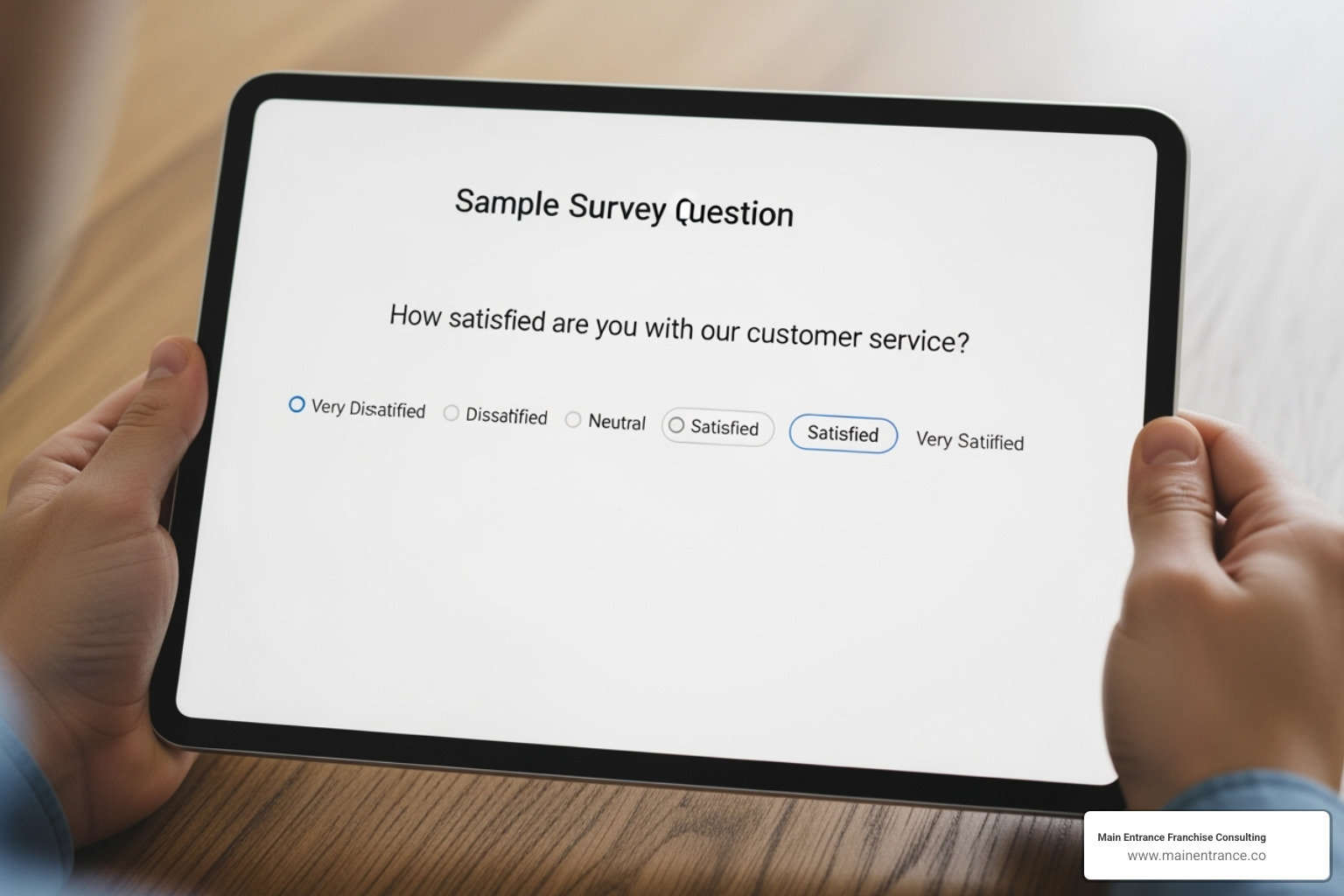
Setting clear goals shapes everything, from the questions you ask to the survey’s length. This upfront planning is the difference between collecting useful insights and a pile of unusable data.
Best Practices for Your Franchisee Satisfaction Survey
- Ensure Confidentiality: This is the foundation of honest feedback. Franchisees must feel safe sharing their real thoughts. Be clear about how you’ll handle their responses.
- Use a Mix of Question Types: Use scaled questions (e.g., 1-5 ratings) for quantitative data to track trends and benchmark against industry standards. Use open-ended questions (“What is one thing we could do to improve your profitability?”) to find the “why” behind the ratings.
- Balance Survey Length: Aim for a survey that is comprehensive but respects franchisees’ time. Around 50 questions is a good target.
- Communicate Before and After: Before, explain the survey’s purpose. After, share a summary of results and your action plan. This “closing the loop” approach shows their participation matters.
- Plan Distribution and Timing: Use multiple channels (email, franchisee portal) to maximize reach. Annual surveys are the industry standard, allowing for meaningful year-over-year tracking without causing survey fatigue.
Common Pitfalls to Avoid
- Leading or Vague Questions: Avoid questions like, “Don’t you agree our new program is great?” or “Are you happy?” They don’t provide actionable insights.
- Survey Fatigue: Don’t overwhelm franchisees with surveys that are too long or too frequent. This leads to poor response quality.
- No Plan to Act on Data: As one industry expert puts it, “when you do survey, you better plan on doing something with the data.” Ignoring feedback erodes trust.
- Fearing Negative Feedback: Negative feedback is a gift. It highlights opportunities for improvement before small issues become major problems.
- Failing to Close the Feedback Loop: Collecting feedback without sharing results or next steps signals that you don’t value your franchisees’ input. This can be more damaging than not surveying at all.
From Data to Action: Analyzing Feedback and Driving Improvement
The real work begins after you’ve collected your franchisee satisfaction survey responses. Raw data won’t improve your system, but thoughtful analysis and strategic action will. This is where you transform numbers and comments into meaningful changes that strengthen your network.

How to Analyze Your Franchisee Satisfaction Survey Data
Smart analysis goes beyond calculating average scores. You need to dig deeper to uncover the stories your data is telling.
- Track the Big Picture: Compare your overall satisfaction score to previous surveys and industry benchmarks to see how you stack up.
- Break Down by Category: Look at each dimension (training, leadership, etc.) separately. Low scores are red flags needing attention.
- Watch for Trends: Year-over-year changes tell you if your efforts are working and help you spot future challenges.
- Analyze the Comments: Open-ended responses give you the “why” behind the numbers. Group comments by theme and look for specific, practical suggestions.
- Segment Your Data: Compare responses by franchisee tenure, region, or performance level to uncover deeper insights. For example, do newer owners feel differently than veterans?
Turning Insights into Actionable Strategies
Analysis is great, but action is what moves the needle. Successful franchisors use data to drive real change.
- Prioritizing key issues: You can’t fix everything at once. Focus on the top 2-3 issues that will have the biggest positive impact on franchisee satisfaction and profitability.
- Involve franchisees in solutions: Forming Franchise Advisory Councils gives franchisees a formal voice. When they help create the fixes, they are much more likely to accept the changes.
- Make targeted improvements: If technology scores are low, invest in better systems. If marketing support is weak, refresh your campaigns. Acting on direct feedback shows you’re listening.
- Celebrate the wins: Don’t just focus on problems. Highlight areas where franchisees are highly satisfied to reinforce positive behaviors and boost morale.
- Close the loop: Share your action plan with franchisees. Tell them what you heard, what you’re doing about it, and when they can expect changes. This transparency builds immense trust.
This process creates a continuous cycle of improvement. For more strategies on building a stronger franchise network, explore our franchise development strategies.
Frequently Asked Questions about Franchisee Satisfaction Surveys
Over my years helping franchise brands, I’ve noticed franchisors often ask the same practical questions about conducting a franchisee satisfaction survey. Here are some insights from our experience at Main Entrance Consulting.
How often should we conduct a franchisee satisfaction survey?
The sweet spot for most systems is an annual comprehensive survey. This timing balances gathering meaningful data with avoiding survey fatigue. Annual surveys allow you to track real progress over time and see which initiatives are working. The timing also aligns with industry standards, keeping your data relevant for benchmarking.
You can supplement this with shorter pulse surveys throughout the year. These quick check-ins can gauge reactions to new programs or technology rollouts without overwhelming your franchisees.
What is a good participation rate for a franchisee survey?
Aim for over 50-60% participation to ensure your results are representative. The Joint’s 2020 survey achieved nearly 65% participation, giving their results strong credibility. High participation allows you to make confident decisions based on the data.
The secret to boosting participation is demonstrating that feedback matters. When franchisees see that past surveys led to positive changes, they are more likely to respond. Clear communication about the survey’s purpose and confidentiality also helps.
Should we use a third-party service or do it ourselves?
This decision impacts both your budget and the quality of your insights. While in-house surveys can be cheaper, we often recommend third-party services, especially as a system matures.
| Feature | In-House Survey | Third-Party Service |
|---|---|---|
| Cost | Generally lower (internal labor) | Higher (service fees) |
| Anonymity | Can be challenging to ensure trust | High; perceived as more objective |
| Expertise | Relies on internal knowledge | Specialized, proven methodologies |
| Benchmarking | Limited to internal data | Access to broad industry-wide benchmarks |
| Resources | Requires significant internal time | Outsourced, freeing up your team |
| Credibility | May be viewed with skepticism | High; seen as independent and unbiased |
Franchisees tend to be more candid when they know their feedback is going through an independent party. The complete anonymity and benchmarking data that third-party services provide are incredibly valuable. This context helps you set realistic goals and identify where you’re truly excelling or falling behind. However, for smaller systems, an in-house approach can be practical if you have strong internal trust and capabilities.
Conclusion
A franchisee satisfaction survey isn’t just a task; it’s the heartbeat of your franchise system. It tells you exactly how healthy your network is. Every satisfied franchisee becomes a brand ambassador, a success story, and proof that your system works.
We’ve covered why satisfaction drives profitability, what to measure, and how to turn data into real improvements. The most successful franchisors understand this is a continuous cycle of listening, learning, and improving. When franchisees see their feedback leads to actual change, they become more engaged, profitable, and loyal.
Happy franchisees create a thriving brand. They perform better, stay longer, and attract higher-quality candidates. Your franchise system is only as strong as the relationships you build. By committing to regular feedback and acting on what you learn, you build the foundation for long-term success.
Ready to strengthen those relationships and open up your network’s full potential? We’re here to help you steer the process. Develop your franchise with expert guidance and see how the right approach to franchisee satisfaction can transform your system.