

Why Low Cost Franchises Are Your Gateway to Business Ownership

Low cost franchises offer a smart path to business ownership, providing a proven model without massive upfront capital. While many believe franchising requires a huge investment, numerous opportunities exist for under $50,000, with some starting below $10,000.
Quick Answer: What Are Low Cost Franchises?
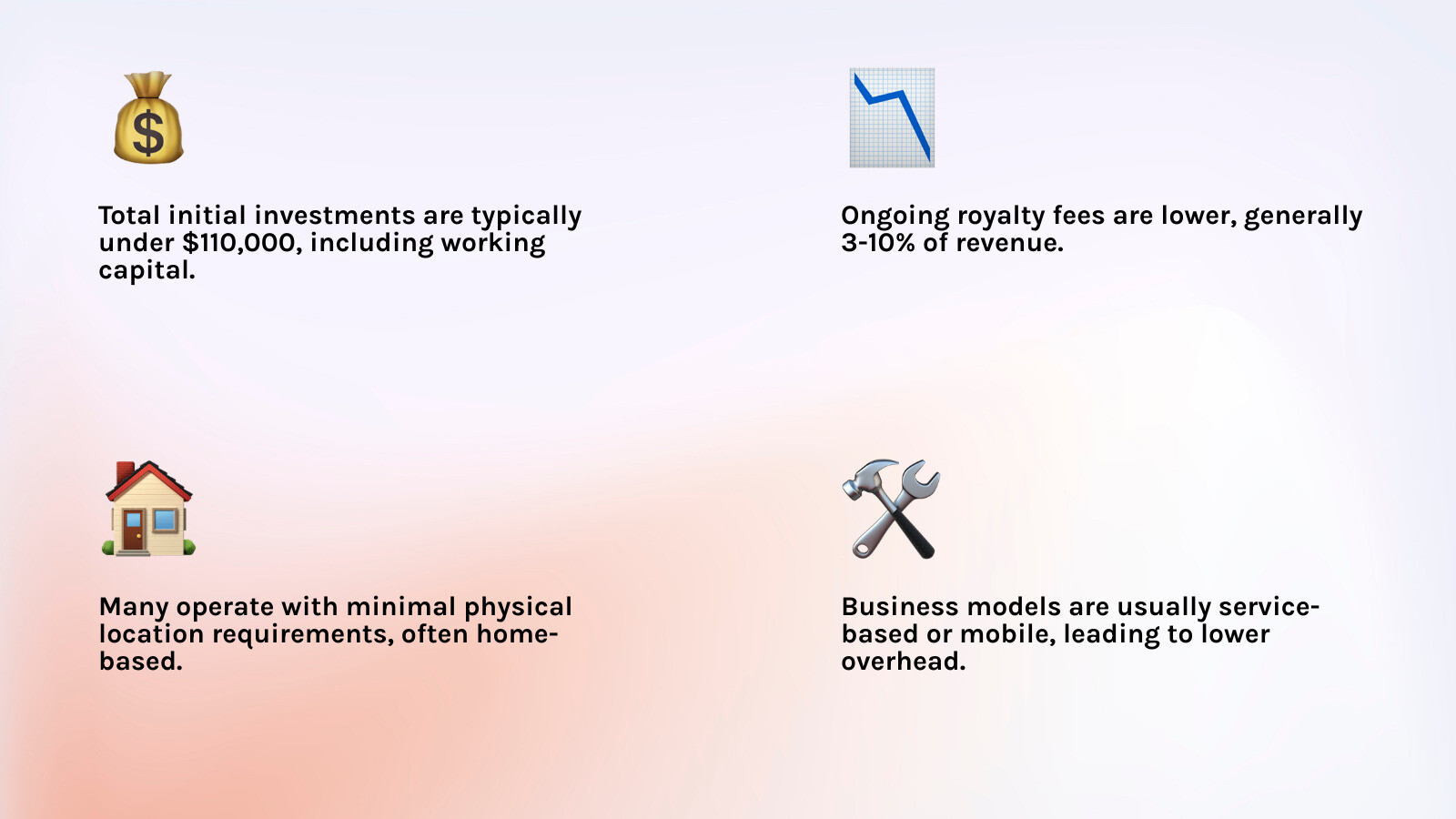
Low cost franchises are business opportunities with:
- Franchise fees under $50,000
- Total initial investments under $110,000
- Lower ongoing royalty fees
- Minimal physical location requirements (often home-based)
- Service-based or mobile business models
Common industries include cleaning services, travel agencies, senior care, children’s services, and mobile businesses. The appeal extends beyond price, offering reduced financial risk, brand recognition, and comprehensive training. In fact, franchises on “Top Low-Cost” lists often have owner satisfaction ratings 15-20% higher than industry benchmarks.
The landscape of affordable franchising is vast, from home-based businesses to mobile services catering to growing markets like senior care and essential needs like cleaning and child care.
However, “low cost” doesn’t mean “no research.” Successful owners understand their total investment, including ongoing fees and working capital. They review disclosure documents, speak with existing franchisees, and align their choice with their skills and market.
This guide will explore the benefits, top industries, and key considerations for buying a low cost franchise. Whether you’re changing careers or expanding your portfolio, affordable franchising could be your path to independence.
I’m Max Emma, a Certified Franchise Executive and founder of Main Entrance Franchise Consulting. With experience as both a franchisor and franchisee, I’ve helped countless clients steer low cost franchises and turn challenges into opportunities.
The Allure of Low Cost Franchises: Big Benefits, Smaller Investment
Many people think franchising requires a fortune, but low cost franchises have made business ownership more accessible than ever. They offer a path to entrepreneurship without the immense financial stress of high-cost ventures.

The most significant benefits include:
- Lower Financial Risk: Affordable franchises reduce the need for large loans, allowing you to start a business without overwhelming debt.
- Proven Business Model: You invest in a system that has already been tested and refined. The franchisor provides a roadmap, which dramatically shortens your learning curve and increases your chances of success compared to an independent startup.
- Established Brand Recognition: You benefit from a trusted name from day one, saving you the time and money required to build a brand from scratch.
- Comprehensive Training and Support: Franchisors offer extensive training in operations, marketing, and customer service, providing ongoing support that is crucial for new business owners.
Many low-cost franchises also offer incredible flexibility. Service-based and home-based models often allow you to keep your day job while you build your business, providing financial security as you grow.
The results are clear: franchisees in top low-cost systems report owner satisfaction ratings 15-20% higher than industry benchmarks. This reflects the quality of support, the effective business model, and the fulfillment that comes with running a successful business.
If you’re curious about how this could work for your specific situation, I’d love to walk you through the possibilities. More info about our services.
Exploring the Landscape: Top Industries for Affordable Franchising
The world of low cost franchises is incredibly diverse, extending far beyond the typical fast-food model. The most accessible opportunities are often service-based, home-based, or mobile businesses that serve real community needs. These ventures require minimal overhead and no expensive real estate, making them ideal for budget-conscious entrepreneurs.

Home & Business Services
This sector is a powerhouse for affordable franchising due to consistent demand for cleaning, repair, and maintenance. Commercial cleaning franchises like 360clean (investment: $22,000-$36,500) and Image One (startup costs: ~$15,000) offer strong entry points. Other popular areas include residential cleaning, window washing, and junk removal. These businesses are often scalable, allowing you to start small and grow your team as your client base expands.
Travel & Hospitality
You can turn a passion for travel into a profitable, home-based business. Cruise Planners, an American Express representative, has investments from $2,295 to $21,870. Dream Vacations, specializing in cruise and land vacations, has a startup cost of around $9,800. These franchises provide comprehensive training and the flexibility to sell full-service vacation packages from home, offering excellent work-life balance.
Health, Wellness & Senior Care
With an aging population, the demand for senior care is booming, making this a recession-resistant industry. Opportunities range from fitness programs like Fit4Mom (investment: $8,245-$28,685) to essential senior placement and in-home care services. For example, Property Management Inc. (PMI) has a total initial investment from $21,250 to $106,800. These businesses offer both financial rewards and the personal fulfillment of helping others.
Children’s Services & Education
Investing in children’s futures provides rewarding and affordable franchise options. Youth sports programs like Soccer Shots (initial investment: $41,034-$53,950) teach skills and build community. Tutoring franchises meet a growing demand for academic support. Consignment events like Rhea Lana’s (startup costs: ~$15,000) offer a valuable community service with low overhead, as they often operate out of rented spaces.
Smart Investing: Key Considerations Before You Buy
Starting on a franchise journey is exciting, but “low cost” doesn’t mean “no risk.” Smart investing in low cost franchises requires thorough due diligence and financial planning to ensure long-term success.

Understanding Your Total Investment
A common mistake is thinking the franchise fee is the only cost. Your total investment includes several components:
- Franchise Fee: The initial, one-time payment to use the brand and system, typically under $50,000 for low-cost options.
- Ongoing Fees: These include royalties (usually 3-10% of gross sales) for ongoing support and marketing fees for brand advertising.
- Startup Costs: This covers equipment, inventory, insurance, and professional fees.
- Working Capital: The crucial funds needed to cover operating expenses like salaries and supplies before your business becomes profitable. Underestimating this is a frequent pitfall.
Franchisors also have minimum net worth and liquid asset requirements to ensure you can weather the startup phase. A franchise consultant can help you steer these financial details. Learn more about What is a Franchise Consultant?.
Franchise vs. Business Opportunity: Know the Difference
This distinction is critical. A franchise is an ongoing relationship with comprehensive training, a proven system, and continuous support. Franchises are heavily regulated, and you receive a detailed Franchise Disclosure Document (FDD).
A business opportunity (BizOpp) typically involves a one-time sale of a system or product with minimal ongoing support. While they are regulated by the FTC Business Opportunity Rule and require a disclosure document, you are largely on your own after the initial setup. The key difference is the level of long-term support. You can find more at the FTC guidance on business opportunities.
How to Avoid Scams and Make an Informed Choice
Protect your investment by being vigilant. Your best defense is thorough due diligence:
- Research the Company: Go beyond the sales pitch. Look into the company’s history, reputation, and any legal issues.
- Review Disclosure Documents: The FDD (for franchises) or the FTC disclosure (for BizOpps) is your most important resource. Hire a franchise attorney to help you understand it.
- Speak to Franchisees: The FDD lists current and former franchisees. Their honest insights into profitability, support, and challenges are invaluable.
- Watch for Red Flags: Be wary of high-pressure sales tactics, guaranteed high returns, or reluctance to provide disclosure documents. The FTC offers guidance on Tips on spotting potential fraud.
Potential Challenges of a Low-Cost Franchise
Approach your investment with open eyes. Potential challenges include:
- Limited Scalability: Some models may have natural limits on growth.
- Varying Brand Recognition: Newer or smaller brands may require more local marketing effort.
- Inconsistent Franchisor Support: The quality of support can vary. Investigate this thoroughly.
- Market Competition: Understand your competitive landscape and unique value proposition.
- Personal Commitment: No business runs itself. Be realistic about the time and hard work required.
Frequently Asked Questions about Low Cost Franchises
What is a realistic startup cost for a low-cost franchise?
Generally, a low-cost franchise has a franchise fee of $50,000 or less and a total initial investment under $110,000. Opportunities truly span a wide range:
- Under $10,000: This includes some home-based travel agencies (like Cruise Planners, starting at $2,295), mobile services, and vending franchises.
- $10,000 to $50,000: This range opens up more options in cleaning services, senior care, and educational programs (like Image One or Rhea Lana’s, both around $15,000).
Crucially, the franchise fee is just one part of the total investment. You must also budget for setup costs, equipment, and working capital—the money needed to cover expenses before you become profitable. Always refer to the Franchise Disclosure Document (FDD) for a realistic estimate of the total initial investment.
How do I evaluate the profitability of a low-cost franchise?
Evaluating profitability requires careful investigation. A low startup cost is meaningless if the business can’t generate sufficient income. Here are the key steps:
- Review Item 19 of the FDD: This section may contain Financial Performance Representations (FPRs) that show average revenues or profit margins of existing franchisees.
- Talk to Existing Franchisees: This is the most important step. Ask them about their actual revenues, operating costs, time to break even, and overall satisfaction. Their real-world insights are invaluable.
- Analyze Ongoing Fees: Factor in royalties and marketing fees, as they directly impact your net income.
- Align with Your Goals: Create your own conservative financial projections to ensure the potential income meets your personal financial needs and lifestyle goals.
Can I get financing for a low-cost franchise?
Yes, several financing options are available even for low cost franchises:
- SBA Loans: The Small Business Administration guarantees loans from banks, often resulting in better terms. Many franchises are on the SBA’s approved list, which can streamline the process.
- Franchisor Financing: Some franchisors offer direct financing or have relationships with third-party lenders familiar with their business model.
- 401(k) Rollovers (ROBS): This allows you to use your retirement funds to start a business without taxes or penalties. It’s a complex process that requires expert guidance.
- Other Options: Unsecured business loans (for those with strong credit) and formalized loans from friends and family are also possibilities.
No matter the route, a solid business plan is essential to demonstrate your viability to lenders. My team and I can help you explore these avenues to find the right financing structure.
Conclusion: Taking the Next Step on Your Franchise Journey
The landscape of low cost franchises proves that business ownership is accessible and achievable. With benefits like reduced financial risk, proven business models, and flexibility, opportunities abound in industries from home services to senior care.
However, the most important takeaway is that research is critical. A lower price tag does not mean you can skip due diligence. Understanding your total investment, reviewing the FDD, and speaking with existing franchisees are non-negotiable steps that protect your future. The most successful owners align their choice with their personal goals, skills, and financial reality.
This is where expert guidance is invaluable. As the founder of Main Entrance Franchise Consulting, my team and I provide personalized support to help you find the right fit. Our services come at no cost to you, as we are compensated by franchisors when we match them with a great candidate. This allows you to get expert guidance without the bill.
Your path to business ownership is personal. It’s about building a life of freedom, fulfillment, and financial security. Whether you’re in Las Vegas, NV, or anywhere in the United States, the right low cost franchise is out there.
I’m here to help you find it. Let’s work together to turn your entrepreneurial dreams into a reality.