

Why Understanding Franchise Brokers Matters for Your Business Journey
Franchise brokers are professionals who help match prospective business owners with suitable franchise opportunities from their portfolio of brands. They act as intermediaries between franchisors and potential franchisees, providing guidance throughout the franchise selection process at no upfront cost to you.
Key facts about franchise brokers:
- What they do: Connect you with franchise opportunities that match your goals, budget, and experience
- How they’re paid: Receive commissions from franchisors (typically $18,000-$30,000 per single-unit sale)
- Cost to you: Free – franchisors pay their fees
- Value they provide: Save time, introduce new opportunities, and guide you through complex paperwork like Franchise Disclosure Documents (FDDs)
With over 3,000 franchise brands recognized by the International Franchise Association in the United States, finding the right opportunity can feel overwhelming. A new franchise business opens every 8 minutes, and the industry accounts for 40% of all retail sales nationwide.
The franchise landscape has grown so complex that many successful entrepreneurs now rely on experienced brokers to steer their options efficiently. As one industry expert noted, “it would be impossible to know the ins and outs of all of the FDDs and FAs for hundreds of different companies.”
I’m Max Emma, a Certified Franchise Executive (CFE) and founder of Main Entrance Franchise Consulting, where I’ve worked with over 100 franchise brands and regularly collaborate with franchise brokers to help clients find their ideal business opportunities. My experience as both a franchisor and franchise consultant gives me unique insight into how these relationships work best for everyone involved.
What Is a Franchise Broker and How Do They Work?
Think of a franchise broker as your personal matchmaker in the business world. Just like you wouldn’t want to meet every single person on a dating app, you don’t want to sift through thousands of franchise opportunities on your own. That’s where franchise brokers come in – they’re the friendly professionals who connect aspiring business owners with franchise opportunities that actually make sense for their unique situation.
Franchise brokers work as intermediaries between you and franchisors, maintaining portfolios of different franchise brands they represent. Instead of you spending months researching every possible option, they bring a carefully selected group of opportunities right to you. They already know these brands inside and out – their investment requirements, ideal candidate profiles, and growth potential.
The process starts with what we call an initial consultation and needs assessment. This isn’t just small talk over coffee. Your broker will dig deep into what makes you tick professionally, what industries spark your interest, how much time you want to spend running a business, and crucially, what your financial comfort zone looks like for this investment.
This detailed conversation allows the broker to transform that overwhelming universe of franchise options into a manageable, relevant shortlist custom specifically to you. It’s like having a personal shopping assistant, but for business opportunities.
For more guidance on navigating your path to franchise ownership, you can explore our comprehensive franchise buying services.
The Difference Between a Broker and a Consultant
Here’s where things get a little confusing – the terms “franchise broker” and “franchise consultant” often get mixed up. Even industry insiders will tell you “the simple answer is… ‘it depends on who you ask.'” To most people looking for franchise opportunities, these roles seem pretty similar.
The key difference lies in who they primarily represent. A franchise broker typically acts as an intermediary for franchisors. They maintain relationships with multiple franchise brands and get paid when they successfully connect you with one of those brands. Their expertise comes from knowing their portfolio inside and out.
A franchise consultant, however, positions themselves more as your personal advisor. They focus on understanding your goals, lifestyle, and investment level first, then guide you toward the best opportunities based purely on what’s right for you. While they still get paid by franchisors when you make a purchase, their emphasis is on providing unbiased guidance throughout your journey.
At Main Entrance Franchise Consulting, we accept this consultant approach – we’re here to help you find the absolute best fit for your unique situation.
There’s also a completely different role called a “franchise field consultant.” These professionals work directly for individual franchisors, helping existing franchisees in specific areas implement systems and maintain brand standards. They’re not involved in helping new people find franchise opportunities.
To learn more about how franchise consulting works, check out our detailed explanation of what is a franchise consultant.
The Typical Broker-Assisted Process
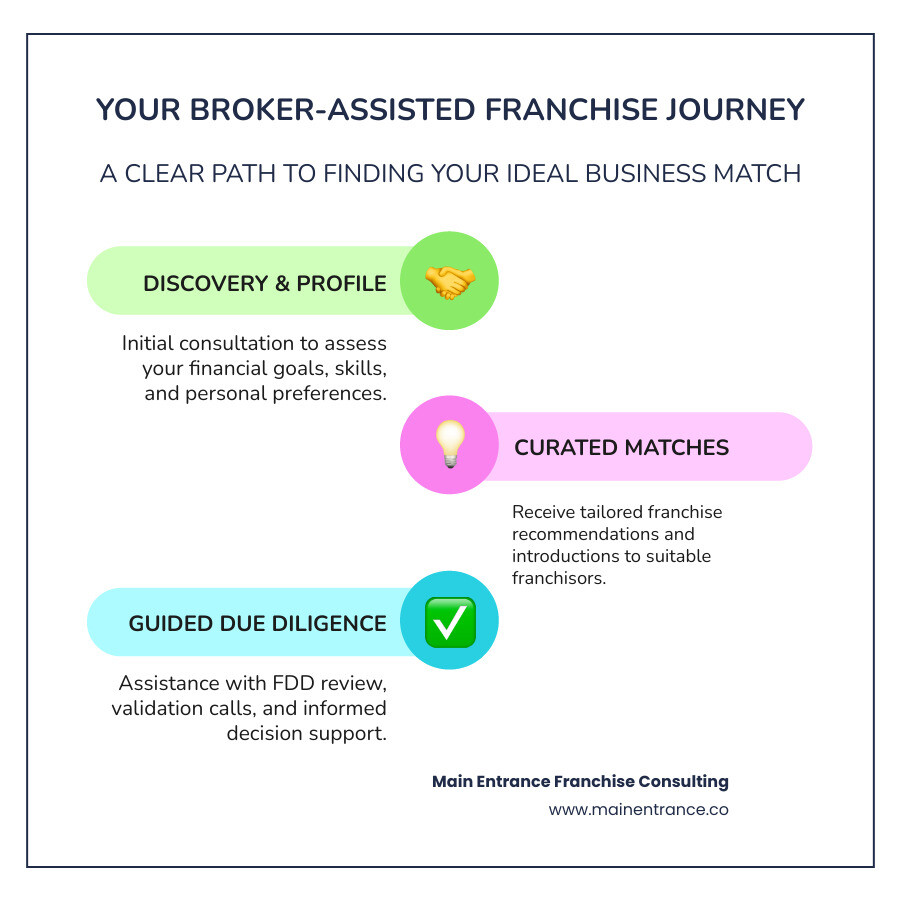
Working with a franchise broker follows a pretty structured path designed to take you from “I’m curious about franchising” to “I’m ready to make a decision.” Here’s what that journey typically looks like.
Everything starts with what we call the “findy call” – and yes, that’s really what we call it in the industry. This conversation goes way beyond surface-level questions. Your broker will explore your professional background, personal interests, lifestyle goals, and financial parameters. Many brokers use specialized assessments during this phase to better understand both your personality profile and financial capacity.
Once your broker has a clear picture of who you are and what you’re looking for, they’ll present matched opportunities from their portfolio. This is where their expertise really shines – they often introduce clients to industries and business models they never would have considered on their own. You might find that the perfect franchise for you isn’t in the industry you originally had in mind.
Next comes facilitating franchisor introductions. Your broker acts as your advocate, making sure you connect with the right people at each franchise company’s corporate office. They know who to call and how to position your candidacy effectively.
The validation call process is where things get really interesting. Your broker will prepare you to speak with existing franchisees of the brands you’re considering. They’ll help you develop the right questions to ask and suggest talking to both newer and more experienced franchise owners to get different perspectives.
Finally, there’s FDD review assistance. The Franchise Disclosure Document can be hundreds of pages of complex legal and financial information. While your broker isn’t a lawyer, they can help you steer through what one industry expert called “the waters of Franchise 101.” They’ll explain different sections, point out key areas to focus on, and help you understand what makes each opportunity unique.
This systematic approach ensures you feel confident and well-informed at every step of your franchise exploration.
The Broker’s Business Model: Commissions and Transparency

Understanding how franchise brokers get paid is key to appreciating their role. This business model is typically quite favorable for the prospective franchisee because, in most cases, their services come at no direct cost to you. That’s right, free advice! This is because franchise brokers are compensated by the franchisor, not by the individual seeking a franchise.
However, this compensation structure also highlights the importance of transparency and thorough due diligence on your part. Since the broker’s income is tied to a successful placement within their portfolio, it’s wise to be aware of potential incentives that might influence their recommendations. This isn’t to say brokers are inherently biased, but rather to encourage a balanced approach to your research.
How Do Franchise Brokers Get Paid?
The payment structure for franchise brokers is almost exclusively commission-based. When you decide to invest in a franchise from their portfolio, the franchisor pays the broker a fee. This fee is generally a percentage of the initial franchise fee that you pay to the franchisor, or sometimes a flat rate.
Research indicates that the average commission for a single-unit franchise sale typically falls between $18,000 to $30,000. For multi-unit agreements or master franchises, these commissions can be significantly larger. It’s important to reiterate: this payment comes from the franchisor’s marketing budget, not from your pocket. You do not pay the broker any upfront costs or fees for their services. This is a huge advantage, as it provides you with expert guidance without adding to your initial investment.
Understanding Broker Incentives
Since franchise brokers are compensated by the franchisor, they inherently represent a portfolio of brands. This means their primary incentive is to successfully place a candidate with one of the franchises they work with. While a reputable broker will always strive to find the best fit for you, it’s worth understanding the dynamics at play.
For instance, a broker might be incentivized to recommend certain brands over others if those brands offer higher commissions or if the broker has a strong relationship with that particular franchisor. There’s also the possibility that brokers might “push multi-unit sales to increase their commissions,” as larger deals naturally lead to larger payouts. This is especially true for emerging brands, which often rely heavily on brokers to “gain market share quickly,” sometimes even before their systems are fully refined.
This isn’t a red flag to avoid brokers entirely, but rather a yellow flag to proceed with informed caution. It underscores the critical importance of independent research on your part. Always consult third-party resources, speak extensively with current franchisees, and, most importantly, engage a qualified franchise attorney to review all legal documents before making any commitments. Your broker is a guide, but your ultimate decision should be based on comprehensive personal due diligence.
For additional insights and tips on making informed decisions, check out our consumer tips for franchise buyers.
The Advantages of Partnering with Reputable Franchise Brokers

Let’s be honest—researching over 3,000 franchise brands on your own sounds about as fun as organizing your sock drawer. Thankfully, working with reputable franchise brokers can transform this overwhelming task into a manageable and even exciting journey.
The most obvious benefit is the time savings. Instead of spending months (or years!) trying to evaluate every franchise opportunity out there, a skilled broker can quickly narrow down your options based on what actually matters to you. They’ve already done the heavy lifting of initial research and vetting, so you can focus your energy on the opportunities that truly deserve your attention.
But it’s not just about saving time. Franchise brokers provide access to opportunities you might never find on your own. They can introduce you to brands and sectors that weren’t even on your radar but could be perfect fits. Their industry expertise gives them intimate knowledge of local markets and business climates that would take you years to develop independently.
Perhaps most importantly, they offer a streamlined process that makes the intense research phase feel less like climbing Mount Everest and more like taking a guided tour. They know exactly which questions to ask, which red flags to watch for, and how to steer the complex world of franchise ownership.
For more insights on expert guidance, explore the advantages of working with a Certified Franchise Executive (CFE).
Gaining Access to a Curated Portfolio
Think of a franchise broker as your personal business matchmaker. They maintain relationships with hundreds of franchisors, giving them a bird’s-eye view of the market that would be impossible for you to replicate on your own.
This broad access means they can introduce you to new sectors you might never have considered. Maybe you walked in thinking about a restaurant franchise, but they might show you a thriving home services business that perfectly matches your skills and lifestyle goals. They’re constantly understanding market trends and can point you toward emerging brands that are positioned for significant growth.
The beauty of working with a broker lies in their ability to help you find a non-obvious fit. They look beyond just the industry name and dive deep into the business model, your personality type, and what kind of lifestyle you want to create. This holistic approach ensures you’re seeing vetted opportunities that truly resonate with who you are and where you want to go.
They’re also experts at exploring different investment levels. Whether you’re looking to invest $50,000 or $500,000, they can match you with opportunities that fit your financial comfort zone while still meeting your business goals.
Assistance with Due Diligence
While your franchise broker isn’t a lawyer or accountant, they play a crucial role in helping you understand what you’re getting into. The Franchise Disclosure Document (FDD) can be hundreds of pages of dense legal language—not exactly bedtime reading for most people.
A good broker will help you steer the Franchise Disclosure Document by breaking down its 23 key sections into digestible pieces. They’ll explain what each part means in plain English and help you identify the most important areas to focus on for your specific situation.
One of their most valuable services is preparing you for franchisee validation calls. These conversations with existing franchisees are absolutely critical to your decision-making process, but knowing what questions to ask can be tricky. Your broker will help you develop a list of probing questions that get to the heart of what it’s really like to operate the business day-to-day.
They can also quickly tell you about territory availability for any franchise you’re considering, saving you from falling in love with a concept only to find there’s no location available in your area. Plus, they’ll help you understand the right questions to ask about everything from franchisor support to realistic profit expectations.
This guidance doesn’t replace the need for professional legal and financial advice, but it does ensure you’re approaching your due diligence with a clear strategy and realistic expectations.
How to Find and Vet the Right Partner

Choosing the right franchise broker can make or break your franchise journey. Think of it like hiring a real estate agent when buying your dream home – you want someone who truly understands your needs, has a proven track record, and will advocate for your best interests.
Just like any profession, there are excellent franchise brokers and ones you’ll want to avoid. The key is doing your homework upfront. You wouldn’t hire the first contractor who knocked on your door, would you? The same principle applies here.
Start by leveraging professional networks and asking for recommendations from other business owners who’ve gone through the franchise process. Their experiences can point you toward brokers who deliver results and away from those who don’t.
Interview several candidates before making your choice. Each broker has their own style, process, and portfolio of brands. Some might specialize in food franchises, while others focus on service-based businesses. Getting a feel for how they work and what services they provide will help you find the best match for your specific goals.
Don’t hesitate to ask for references from past clients. A reputable broker will gladly connect you with previous candidates who can share their experiences. These conversations often reveal insights you won’t get from a polished sales presentation.
Check their credentials too. Look for certifications from recognized industry organizations or educational backgrounds that demonstrate their expertise in franchising.
Where to Find Reputable Franchise Brokers
When you’re ready to begin your franchise search, connecting with a trusted professional is your first smart move. At Main Entrance Franchise Consulting, we provide expert guidance with no upfront costs, helping you steer the complex world of franchising with confidence. We work closely with a network of reputable franchise brokers to ensure you have access to quality opportunities and comprehensive support throughout your journey.
Beyond working with established consulting firms like ours, you can explore larger broker networks that maintain strict standards for their members. These networks often have built-in vetting processes that can give you additional confidence in their professionals.
Here are the essential questions to ask any potential franchise broker:
- How long have you been working as a franchise broker?
- How many successful placements have you completed?
- What’s your process for understanding my goals and matching opportunities?
- How many brands are in your portfolio, and what industries do they cover?
- How exactly do you get paid, and what are your typical commission rates?
- What support do you provide during due diligence, like FDD reviews and validation calls?
- Can you connect me with three recent clients as references?
- What happens if I decide not to pursue any franchise after we start working together?
These questions will help you gauge their experience level, transparency about compensation, and genuine commitment to finding you the right fit rather than just making a quick sale.
Alternatives to Using a Broker
While working with franchise brokers offers significant advantages, some people prefer taking a more hands-on approach to their franchise search. There’s nothing wrong with this path – it just requires more time and energy on your part.
Direct research is probably the most common alternative. This means diving deep into online resources, reading industry publications, and doing your own initial vetting of opportunities. The challenge here is the sheer volume of information available. With over 3,000 franchise brands out there, it can quickly become overwhelming without a systematic approach.
Speaking directly with current franchisees is perhaps the most valuable alternative approach. You can reach out to existing franchise owners even without a broker’s introduction. This gives you unfiltered insights into the day-to-day reality of running the business. Make sure to talk to both new franchisees who are just getting started and seasoned owners who’ve been in business for several years – you’ll get very different perspectives that paint a complete picture.
The beauty of franchisee validation calls is that current owners are usually quite honest about their experiences. They’ll tell you about the challenges they didn’t expect, how much support they actually receive from corporate, and whether their financial expectations have been met. This kind of real-world feedback is invaluable regardless of how you initially find the opportunity.
Even if you choose to go it alone initially, you can always connect with a consultant later in the process when you’re ready to narrow down your options and need expert guidance on due diligence.
Frequently Asked Questions about Working with Franchise Brokers
Let’s address some of the most common questions I hear from prospective franchisees about working with franchise brokers. These are the real concerns that keep people up at night when they’re considering this path to business ownership.
Are a franchise broker’s services really free for me?
This is probably the question I get asked most often, and I completely understand why! It seems almost too good to be true, right? But yes, for you as the prospective franchisee, the service is typically completely free.
Here’s how it works: franchise brokers are compensated by the franchisor from the franchise fee if you decide to buy a franchise they represent. Think of it like a real estate transaction where the seller pays the agent’s commission. This means you get expert guidance, access to curated opportunities, and ongoing support throughout your journey without any direct financial outlay for the broker’s services.
The beauty of this model is that it removes a significant barrier to getting professional help. You’re already making a substantial investment in your franchise, so having access to expert guidance without additional costs is a genuine advantage.
Will a broker help me review the Franchise Disclosure Document (FDD)?
Absolutely! A good franchise broker will be your guide through the often intimidating FDD process. They’ll help you understand the document’s various sections, explain the industry jargon, and highlight the key areas you should focus on. Think of them as your translator for “franchise speak.”
They can help you formulate the right questions to ask and point out important details you might otherwise miss. For example, they’ll help you understand Item 19 (financial performance representations) or Item 7 (estimated initial investment) in plain English.
However, and this is crucial, your broker is not a substitute for qualified legal counsel. While they can guide you through understanding the FDD, you should always have an independent franchise attorney review the document before you sign anything. Your broker will likely encourage this step because reputable brokers want you to make fully informed decisions.
Can I work with more than one franchise broker at a time?
While there’s nothing legally stopping you from working with multiple franchise brokers, it’s generally not a smart strategy. I always tell my clients to think of it like dating – you wouldn’t want to introduce the same person to your parents twice through different friends, would you?
Working with multiple brokers creates unnecessary confusion for both you and the franchisors. Franchisors carefully track who introduced each candidate, and having multiple brokers involved can complicate commission payments and create awkward situations. You might even find yourself in a position where two brokers are competing for the same placement, which doesn’t serve your best interests.
Instead, invest your time in finding one reputable broker you trust and work exclusively with them. This focused approach allows for a more efficient search process and builds a stronger working relationship. Your broker will get to know your preferences better, and you’ll avoid the confusion of juggling multiple recommendations and processes.
Your Next Step Towards Franchise Ownership
As we wrap up this comprehensive guide, let’s take a moment to reflect on what we’ve finded together. Franchise brokers truly can be your secret weapon in navigating the vast world of franchise opportunities. They’re like having a knowledgeable friend who happens to know the ins and outs of thousands of businesses – and they’re willing to share that expertise at no cost to you.
The time savings alone make working with a reputable broker worthwhile. Instead of spending months researching over 3,000 franchise brands, you get a curated selection that actually matches your goals and budget. They introduce you to opportunities you never knew existed and help you avoid common pitfalls that trip up first-time franchise buyers.
But here’s the thing – and this is crucial – a broker is your guide, not your decision-maker. Think of them as an excellent GPS system: they’ll show you the best routes and warn you about traffic jams, but you’re still the one behind the wheel. The ultimate responsibility for due diligence lies squarely with you.
This means combining your broker’s insights with your own thorough research. Talk extensively with existing franchisees – both the happy ones and those who might have struggled. Get multiple perspectives. Ask the tough questions about profitability, work-life balance, and franchisor support. Most importantly, align every decision with your personal goals and aspirations.
What good is a profitable business if it doesn’t fit your lifestyle? What’s the point of a “hot” franchise trend if it doesn’t excite you to get up every morning?
At Main Entrance Franchise Consulting, we understand that choosing a franchise isn’t just a business decision – it’s a life decision. That’s why we take a client-focused approach, offering expert guidance with flexible compensation models and no upfront costs. We’re not here to push you toward any particular brand; we’re here to help you find the opportunity that makes you genuinely excited about your entrepreneurial future.
The franchise world might seem overwhelming at first glance, but with the right guidance and your own careful research, it becomes an exciting landscape of possibilities. Your perfect franchise match is out there waiting – and now you have the knowledge and tools to find it.
Ready to explore what franchise ownership could look like for you? Explore our franchise development services and let’s start this journey together.