

Why the Franchise Selection Process Matters More Than You Think
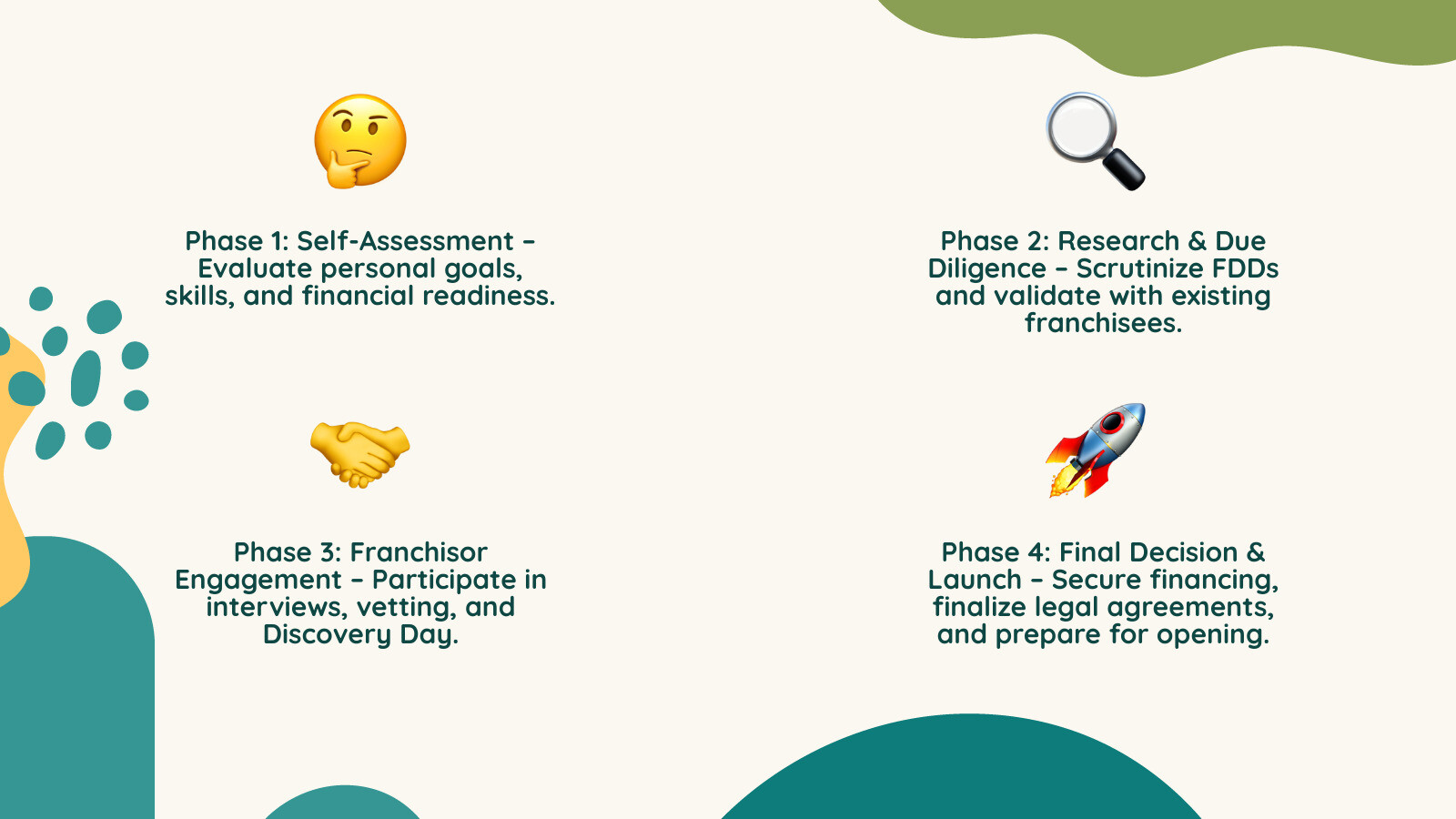
The franchise selection process is a structured journey to identify, evaluate, and choose the right franchise for your goals, skills, and finances. It involves four key phases: self-assessment, research and due diligence, franchisor engagement, and finalizing the deal.
Choosing the wrong franchise is a costly mistake. Studies show that misfitting accounts for approximately 35% of franchisee failures because aspiring owners often prioritize brand popularity over personal fit.
The stakes are high, with investments ranging from under $10,000 to over $5 million and typical agreements lasting 10 years. A poor choice can lock up your capital and energy for a decade.
However, a methodical approach to the franchise selection process dramatically improves your odds. Highly selective franchisors like Chick-fil-A, with a 0.15% acceptance rate, focus on finding the right fit. This pays off, as their franchise failure rate is just 5%, far below the industry average.
The goal isn’t just finding a franchise; it’s about finding your franchise—one that aligns with your financial capacity, lifestyle, and long-term goals.
I’m Max Emma, a Certified Franchise Executive (CFE) and founder of Main Entrance Franchise Consulting. Having worked as both a franchisor and a consultant with over 100 brands, I’ve guided countless individuals through this process. My mission is to help you avoid costly errors and find an opportunity that truly fits.
Phase 1: Foundational Self-Assessment and Preparation
Before browsing franchise directories, the most important part of the franchise selection process is understanding yourself. Many people skip this step, get excited about a concept, and later realize the daily reality of the business doesn’t suit them—a painful and expensive lesson.
Franchisors seek the right person, someone whose skills, personality, and goals align with their model. You must do the same from your side.

This phase is about honest self-reflection. What are your personal requirements, skills, and lifestyle goals? I encourage clients to consider The 4 Freedoms That Motivate Successful Franchise Owners: time, financial, relationship, and location freedom. Which matter most to you?
Also, consider your long-term commitment (agreements are often 10 years), business acumen, leadership style, and risk tolerance. Franchising involves proven systems, but it’s still a business with inherent risks.
Are You a Good Fit for Franchising?
Franchising isn’t for everyone. First, determine your ideal role: do you want to be hands-on or semi-absentee? Different models cater to each preference.
Next, consider your ability to adhere to brand standards. Franchising works because of consistency. You’re buying a proven system, not a blank canvas. Successful franchisees are coachable and follow the franchisor’s refined methods rather than trying to reinvent the wheel.
There’s a balance between entrepreneurial spirit and following a system. Your entrepreneurship shines in how you execute the playbook, motivate your team, and market locally—all within the franchisor’s framework.
Finally, conduct a thorough strengths and weaknesses analysis. Choose a franchise that plays to your strengths and allows you to hire for your weaknesses. If you dislike customer service, a retail-heavy franchise is a poor choice.
Assessing Your Financial Readiness
No matter the fit, the numbers must work. Initial investment costs vary widely: a home-based franchise might start around $10,000, while most fall in the $100,000 to $300,000 range. Large concepts like hotels can exceed $5 million. This investment covers the franchise fee, equipment, inventory, and crucial working capital.
You’ll also have ongoing fees, such as royalties (a percentage of gross revenue) and marketing fund contributions. Most franchisors have net worth and liquid capital requirements to ensure you can weather slow periods.
Creating a budget is essential. Factor in the franchise fee, real estate, build-out, equipment, marketing, insurance, and personal living expenses for at least 6-12 months, as profitability takes time.
Fortunately, financing options are available. Many use SBA loans, conventional bank loans, or a 401(k) rollover (ROBS). Each has pros and cons, so consult a financial advisor familiar with franchising.
Your financial stability matters to the franchisor, as they are investing their brand in you. But you should also evaluate their financial health. A struggling franchisor can’t provide the support you need, a topic we’ll cover in Phase 2.
Phase 2: The Comprehensive Franchise Selection Process
After looking inward, it’s time to look outward. Phase 2 of the franchise selection process is where you research opportunities, analyze markets, and dig into the details that separate a great investment from a costly mistake.

Start by casting a wide net beyond familiar names. Thousands of opportunities exist in industries like pet care, senior services, fitness, and education. Research industries that align with your self-assessment, then identify specific franchises. The FTC’s A Consumer’s Guide to Buying a Franchise is a helpful resource.
Next, conduct a market demand analysis. Is there a need for this service in your area? Look at local demographics and growth trends. A competition assessment is also critical. Is the market saturated, or are there gaps you can fill? Finally, consider brand reputation. A well-known brand brings built-in customer trust, a major advantage over starting from scratch.
Decoding the Franchise Disclosure Document (FDD)
The Franchise Disclosure Document (FDD) is the most important document in this process. Franchisors must provide it at least 14 days before you sign or pay. It contains 23 items detailing every aspect of the system. Skimming it is like buying a house without an inspection. Pay close attention to these key items:
- Item 3 (Litigation): Reveals lawsuits involving the franchisor. Look for patterns of complaints from franchisees.
- Items 5, 6, & 7 (Fees and Costs): Break down the initial franchise fee, estimated startup costs, and ongoing fees like royalties and advertising contributions.
- Item 12 (Territory): Explains your territory rights, including whether it’s exclusive and how it’s defined.
- Item 17 (Renewal, Termination, Transfer): Outlines the agreement term, conditions for renewal or termination, and your rights if you decide to sell.
- Item 19 (Financial Performance Representations): Provides historical sales or revenue data from existing locations. If it’s blank, you must rely on franchisee validation for financial insights.
- Item 20 (Franchisees): Lists current and former franchisees with contact information. It also shows franchisee turnover rates—a high rate is a major red flag.
- Item 21 (Financial Statements): Contains the franchisor’s audited financials, allowing you to assess their stability.
Reading the FDD is non-negotiable. Have an experienced franchise attorney review it with you to avoid costly mistakes.
Validation: Speaking with Current and Former Franchisees
The FDD tells you what the franchisor promises. Validation tells you what they actually deliver.
Validation means calling current and former franchisees from the list in Item 20 of the FDD. This is one of the most valuable steps. Aim to speak with 10-15 people, including veterans, newcomers, and those who have left the system.
Prepare a list of questions covering key topics:
- Franchisor Support: Is the training adequate? Is ongoing support helpful and responsive?
- Profitability: Are they meeting financial expectations? What are their profit margins, and how long did it take to become profitable?
- Daily Operations: What does a typical week look like? How many hours do they work? What are the biggest challenges?
- Overall Satisfaction: What surprised them most, good and bad? And most importantly: “If you could go back in time, would you buy this franchise again?” Their answer is incredibly revealing.
If possible, visit existing franchise locations to see the operation firsthand. This validation phase is your best tool for uncovering the truth behind the marketing materials.
Phase 3: Engaging the Franchisor and Mutual Vetting
After narrowing your options, you’ll begin direct engagement with the franchisor. This isn’t a one-way street; it’s a mutual vetting period where both parties assess the fit.

Your first formal step is usually a call with a franchise development representative to express interest and ask initial questions. If that goes well, you’ll submit a detailed application covering your background and finances, followed by background checks. A series of interviews will then dive deeper into your skills, leadership style, and alignment with the brand’s culture. Throughout this process, you should be evaluating their professionalism, transparency, and support systems.
Understanding the Franchisor’s Franchise Selection Process
Many aspiring franchisees don’t realize that reputable franchisors are often more selective than they are. A franchisor’s success depends entirely on the success of its franchisees. A bad fit damages their brand, hurts system-wide performance, and creates legal risks.
This is why they have rigorous vetting processes. They seek individuals with an entrepreneurial spirit balanced by a willingness to follow a proven system, financial stability, and the right attitude. In fact, research in the Journal of Business Research suggests applicant attitude is a top criterion for selecting franchisees.
This selectivity protects both parties from the costly mistake of misfitting, which accounts for a significant percentage of franchisee failures. When a franchisor carefully screens candidates, they aren’t just protecting themselves—they’re protecting your investment, too.
The Importance of Findy Day
The pinnacle of the franchise selection process is often called Findy Day (or Findy Day), where you visit the corporate headquarters to meet the team face-to-face.
This event is your chance to see behind the curtain and experience the company culture. You’ll meet executives, operations staff, and marketing teams. It’s an opportunity to ask in-depth questions about the company’s vision, how they handle franchisee issues, and what the culture is really like.
Findy Day is a mutual evaluation. While you assess them, they are making their final assessment of you. They’re observing how you interact with the team and whether you seem genuinely aligned with their system.
Approach Findy Day with an open mind but a critical eye. It’s far better to find a misalignment here than six months after you’ve invested hundreds of thousands of dollars. If everything feels right after this phase, you’re ready to finalize the deal.
Phase 4: Finalizing the Deal and Launching Your Business
You’ve done your homework and found a promising match. The final phase of the franchise selection process is about finalizing legal and financial details to prepare for launch.

This is where you’ll finalize your financing, whether through an SBA loan, bank financing, or a 401(k) rollover. At the same time, you’ll review the franchise agreement with your attorney. Never sign a franchise agreement without legal counsel. The franchisor’s attorneys wrote it to protect them; you need someone protecting you.
Once you sign, the franchisor’s support system kicks in. You’ll receive initial and ongoing training on everything from operations to customer service. They will also provide guidance on your site selection and build-out process.
Site Selection and Real Estate
For brick-and-mortar franchises, location is paramount. Your franchisor should provide robust support, using demographic analysis and refined site selection criteria to help you find the right spot. They know what works for their concept, whether it’s high foot traffic or highway visibility.
Financial planning for your location goes beyond rent. You must budget for leasehold improvements, utilities, and insurance. Leasing offers flexibility and lower upfront costs, while purchasing builds equity but carries more risk. When it comes to lease negotiations, engage a real estate attorney to help you steer critical terms. Your franchisor may also connect you with specialized brokers. My firm offers Services that include guidance on these real estate complexities.
Understanding the Franchise Agreement
The franchise agreement is the legal foundation of your relationship with the franchisor, typically for a 10-year commitment. It outlines your rights and obligations, the franchisor’s responsibilities, fees, and operational rules.
This document ensures brand consistency for the franchisor and defines the support you receive for your investment. It will also detail common reasons for termination or non-renewal, such as failure to meet performance standards or non-payment of fees. Understanding these clauses upfront is smart business planning and helps you develop an exit strategy.
Franchise agreements are complex legal documents. You must have an experienced franchise attorney review the agreement line by line. They will explain each clause’s implications and ensure you fully understand what you’re signing.
Frequently Asked Questions about Choosing a Franchise
What are the typical costs and profit margins for a franchise?
Understanding the financials is a crucial part of your franchise selection process. The initial investment varies dramatically, from as low as $10,000 for a home-based business to $5 million or more for a large hotel. The average is typically between $100,000 and $300,000. This covers your franchise fee, equipment, and working capital.
Ongoing costs include royalties (usually 4-8% of gross revenue), advertising fund contributions, and standard operational expenses like rent and payroll. As for profit, typical franchise profit margins range from 4 to 12 percent of gross revenue after all expenses are paid. Owners typically pay themselves a salary or take draws from the business equity.
What are the benefits of a franchise vs. an independent business?
Buying a franchise offers several key advantages over starting a business from scratch. The biggest is a proven business plan—the franchisor has already refined the model, which lowers your operational risk.
Other major benefits include:
- Brand Recognition: Customers already know and trust the brand, driving demand from day one.
- Built-in Supply Chain: Franchisors have established supplier relationships, ensuring quality control and potentially better pricing.
- Training and Support: You receive comprehensive initial and ongoing training, operational manuals, and a dedicated support system for everything from site selection to marketing.
Working with an expert can help you leverage these benefits effectively. That’s where the Advantages of Working with a Certified Franchise Executive (CFE) become clear.
How often do franchises fail and how can I mitigate the risk?
Franchise failure rates vary widely, with studies showing rates from 2 percent to as high as 50 percent, depending on the industry and how “failure” is defined. However, you can dramatically reduce your risk by following a thorough franchise selection process.
Risk mitigation comes down to due diligence. As outlined in this guide, you must:
- Review the FDD carefully, focusing on litigation history, franchisee turnover, and financial performance.
- Validate with current and former franchisees to get an unfiltered view of the business.
- Choose a strong brand with a proven track record and a commitment to franchisee success.
- Ensure personal and financial fit. Misfitting is a leading cause of failure and is entirely preventable through honest self-assessment.
A methodical selection process is your best defense against making a poor investment.
Conclusion: Making Your Final Decision with Confidence
You’ve steerd the franchise selection process—a journey that demands patience and diligence. By following a structured approach, you’re not just reducing risk; you’re dramatically increasing your chances of finding a franchise that truly fits your life.
You’re choosing how you’ll spend your days and what kind of future you’re building. A franchise that aligns with your skills, finances, and goals is more likely to bring you genuine satisfaction.
Throughout my years as a franchisor and consultant, I’ve seen the difference expert guidance makes. Trying to steer this process alone can lead to costly mistakes. That’s why I founded Main Entrance Franchise Consulting.
I’m Max Emma, a Certified Franchise Executive (CFE), and my mission is to help you find the right opportunity with no upfront costs. You don’t have to figure this out alone. I’m here to walk alongside you every step of the way.
Ready to take the next step towards entrepreneurship with confidence? Let’s find your perfect match together.