

Why a Guide to Franchising Matters for Your Future
A guide to franchising is essential for anyone considering business ownership through a proven system. Franchising offers a middle path between starting from scratch and buying an existing business, giving you brand recognition and a proven business model from day one.
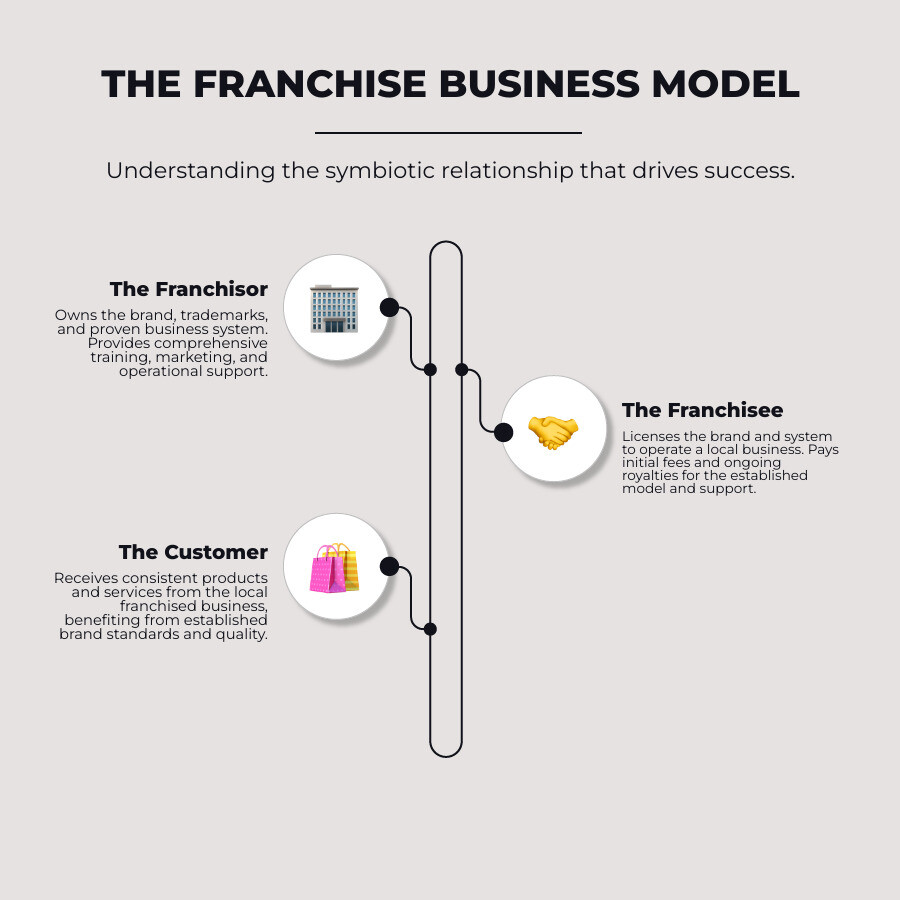
In the franchise relationship, the franchisor (the parent company) licenses their brand, trademarks, and business system. The franchisee (you) pays an initial fee and ongoing royalties to operate a local business using these assets, following their proven methods.
The Franchising Process at a Glance:
- Understand the Model – Learn how franchisors license their system to franchisees.
- Assess Your Fit – Evaluate your skills, finances, and commitment.
- Research Opportunities – Explore industries and brands that match your goals.
- Review the FDD – Analyze the legal disclosure document with professional help.
- Validate with Franchisees – Speak with current and former owners.
- Attend Findy Day – Meet the corporate team to evaluate mutual fit.
- Secure Financing – Arrange funding for your investment.
- Sign and Launch – Complete training and open your business.
This guide walks you through each step. You’ll learn to evaluate opportunities, understand legal documents, and launch successfully. I’m Max Emma, a Certified Franchise Executive (CFE) who has been both a franchisor and franchisee. Through my work at Main Entrance Franchise Consulting, I’ve helped countless individuals use this guide to franchising to find opportunities that match their skills and goals.
Is Franchising Your Path to Business Ownership?
Dreaming of owning a business but daunted by the risks of starting from scratch? Franchising offers a compelling middle ground. You buy a business-in-a-box with an established customer service model, ongoing support, and recognized products or services. It has helped thousands build wealth across hundreds of industries.
However, franchising isn’t a magic bullet. It requires capital, hard work, and honest self-reflection about your abilities, finances, and goals.
The Pros and Cons of Being a Franchisee
Franchising offers significant advantages but also comes with unique challenges.
Pros:
- Established Brand: You get instant name recognition and customer trust.
- Proven Business Model: You use a blueprint that has been tested and refined, reducing trial-and-error.
- Operational Support: Most franchisors provide comprehensive training, manuals, and ongoing guidance.
- Marketing Assistance: You benefit from larger, system-wide advertising campaigns.
- Peer Network: You join a community of fellow franchisees who can offer invaluable advice and support.
Cons:
- Less Autonomy: You must follow the franchisor’s system, including rules on operations and suppliers.
- Ongoing Fees: You will pay royalty fees (typically a percentage of sales) and other contributions for the life of your agreement.
- Contractual Restrictions: Your franchise agreement is a legally binding contract that governs your territory, exit strategy, and more.
- Shared Reputation: Your success is tied to the franchisor’s performance and brand reputation.
Debunking Common Franchising Myths
- Myth: Franchises guarantee success. Reality: A franchise provides the tools, but your effort and execution determine your success.
- Myth: Franchise owners have no freedom. Reality: You make key decisions daily, from hiring staff to local marketing, all within a proven framework.
- Myth: Franchising is only for fast-food. Reality: Franchises span nearly every industry, including healthcare, fitness, pet care, senior services, and technology.
- Myth: Franchises are only for millionaires. Reality: Investment levels vary widely, with some home-based franchises starting for under $50,000.
Let me show you how starting from scratch compares to buying a franchise:
Starting a Business from Scratch vs. Buying a Franchise
| Feature | Starting from Scratch | Buying a Franchise |
|---|---|---|
| Business Concept | Develop your own idea, brand, and systems | Use a proven business model and established brand |
| Risk Level | Higher – unproven concept, no existing support | Lower – established system, franchisor support |
| Brand Recognition | Build from zero | Instant name recognition and customer trust |
| Operational Support | Figure it out yourself | Comprehensive training and ongoing support |
| Marketing | Develop and fund all marketing efforts | Benefit from established marketing and advertising |
| Autonomy | Complete freedom and control | Operate within franchisor’s guidelines and system |
| Costs | Variable, often unpredictable startup costs | Initial franchise fee + ongoing royalties & other fees |
| Time to Launch | Potentially longer, many unknowns | Often faster, structured launch process |
Franchise ownership is a significant commitment that affects your entire family, demanding long hours and financial investment. Honest conversations with your loved ones are essential. My own journey as both a franchisor and franchisee taught me that family buy-in is critical. You can learn more about our founder’s journey to see how these experiences shape my consulting approach.
This guide to franchising is about helping you make an informed decision that’s right for you, starting with an honest look at your skills and financial readiness.
Finding Your Perfect Franchise Match

Now for the fun part—finding the right franchise. With thousands of brands available, the challenge isn’t finding a franchise; it’s finding your franchise.
First, understand the different types of opportunities. A single-unit franchise is the most common path, where you own and operate one location. For those with bigger ambitions, a multi-unit franchise allows you to operate several locations. Home-based franchises have also become very popular, offering lower overhead in service-based industries like consulting, mobile pet grooming, or home repair.
Consumer preferences are always evolving, creating new opportunities. While Quick Service Restaurants remain a powerhouse, the real growth story is in Health, Personal Care, and Fitness. This sector is expanding as people invest more in their well-being, creating demand for fitness studios, salons, and cleaning services.
Home-based and mobile businesses also continue to grow. Models like lawn care, home repair, and cleaning services offer lower startup costs and flexible schedules, which are attractive to many aspiring owners.
To find your match, you need to do intentional research:
- Explore online directories: Filter franchises by industry, investment level, and location to create a shortlist.
- Attend franchise expos: Meet franchisors in person, but be wary of high-pressure sales tactics.
- Review franchisor websites: Look beyond marketing to understand their values, history, and support systems.
- Join informational webinars: Learn about a business model with no commitment.
Industry knowledge is also key. The International Franchise Association provides excellent resources on franchising fundamentals and trends. Staying current helps you spot emerging opportunities. You can also Read our Blog for industry trends to keep up with the latest developments.
The best franchise opportunity is one that aligns with your personal interests, skills, and financial reality. A franchisee who is passionate about their industry will almost always outperform someone who chose a business based purely on projected returns. Ask yourself what kind of business you truly want to run day-to-day. Your answer matters as much as any financial projection.
The Ultimate Guide to Franchising Due Diligence

Due diligence is your shield against surprises. It’s about digging deep, asking the right questions, and getting all the facts before you commit to a significant investment.
A Deep Dive into the FDD: Your Essential Guide to Franchising Law
The Franchise Disclosure Document (FDD) is the cornerstone of your research. This legal document, required by the FTC’s Franchise Rule, is broken into 23 sections (“Items”) that detail the franchisor, the system, costs, and obligations. By law, franchisors must provide the FDD at least 14 calendar days before you sign any contract or pay any money (the 14-Day Rule). This gives you crucial time for review and professional advice.
Key FDD Items to Scrutinize:
- Item 1: The Franchisor. The company’s background and business history.
- Item 3: Litigation. A history of legal battles involving the franchisor or its leaders.
- Item 4: Bankruptcy. Any bankruptcy history for the company or its executives.
- Item 7: Estimated Initial Investment. A detailed breakdown of all startup costs, from the franchise fee to working capital.
- Item 11: Franchisor’s Support. A description of the training, marketing, and operational support you will receive.
- Item 12: Territory. Defines your specific operating area and whether it is exclusive.
- Item 17: Renewal, Termination, and Transfer. The rules for renewing, ending, or selling your franchise.
- Item 19: Financial Performance Representations (FPRs). Any earnings claims made by the franchisor. Scrutinize this data carefully.
- Item 20: Outlets and Franchisee Information. A list of current and former franchisees—a goldmine for your validation calls.
- Item 21: Financial Statements. The franchisor’s audited financial statements, which indicate their financial health.
For a deeper understanding, Read the FTC’s Consumer’s Guide to Buying a Franchise.
Validating the Opportunity by Speaking with Real Franchisees
While the FDD provides the legal facts, talking to current and former franchisees gives you the real-world story. This “validation” step is the most critical part of your due diligence. Your goal is to verify the franchisor’s claims, understand the day-to-day reality, and gauge the quality of support.
Key Questions to Ask Franchisees:
- Why did you choose this franchise?
- Was the total investment estimate in the FDD accurate?
- How long did it take for you to become profitable?
- Is the training and ongoing support effective and responsive?
- How would you describe your relationship with the franchisor?
- What has been your biggest challenge, and how was it resolved?
- (For former franchisees) Why did you leave the system?
- Knowing what you know now, would you make the same decision again?
These conversations help you spot red flags, such as consistent negativity, high franchisee turnover, or a disconnect between the franchisor’s promises and the owners’ experiences. This process can feel overwhelming, which is where a consultant can help. As your personal guide to franchising, I help clients steer these steps to make confident decisions. You can learn more about What is a Franchise Consultant? and how we simplify this journey.
The Final Steps to Becoming a Franchise Owner

You’ve completed your due diligence and are feeling confident. Now you’re on the home stretch, where your dream of franchise ownership starts to become a reality.
Your Comprehensive Guide to Franchising Finances
Securing funding is a critical step. Your Total Investment Range, detailed in Item 7 of the FDD, includes the Initial Franchise Fee, real estate, equipment, inventory, and working capital. This total can range from under $50,000 for a home-based business to over $1 million for a large restaurant. You’ll also have Ongoing Royalties and Marketing Fund contributions.
There are several common financing options to explore:
- SBA Loans: The Small Business Administration guarantees loans through banks, making them a popular choice for franchisees.
- Franchisor Financing: Some franchisors offer direct financing or have partnerships with preferred lenders.
- Personal Savings: Many entrepreneurs use their own savings to fund their investment.
- 401(k) Rollovers (ROBS): This option lets you use retirement funds to invest in your business without taxes or penalties.
At Main Entrance, I connect clients with trusted financial advisors who specialize in franchise funding.
What to Expect on Findy Day and Signing the Agreement
Findy Day (or Findy Day) is a pivotal, invitation-only event at the franchisor’s headquarters. It’s a mutual evaluation: you get to meet the corporate team and experience the culture, while they confirm you’re a good fit for their system. Come prepared with your final questions.
If Findy Day solidifies your decision, the next step is signing the Franchise Agreement. This is the legally binding contract that outlines all rights and responsibilities. Pay close attention to key terms like:
- Territory Rights: Your exclusive or non-exclusive operating area.
- Term Length: The duration of your agreement, often 5 to 20 years.
- Obligations: Your duties and the franchisor’s commitments.
- Renewal, Termination, and Transfer: The rules for continuing, ending, or selling your business.
Crucially, have a qualified franchise attorney review the agreement before you sign. They will protect your interests and ensure you understand every clause. For more on this, Learn how to break down Franchise Agreements.
Once signed, you’ll begin the initial training process and prepare to launch your new business!
Launching and Thriving as a Franchise Hero
Congratulations! You’ve signed the agreement and are ready to open your doors. Launching is one thing—thriving is another. Your success now depends on how well you execute the system while bringing your own entrepreneurial energy.
-
Follow the System: You invested in a proven model, so resist reinventing the wheel. The franchisor’s manuals and procedures exist because they work. Your job is to execute them with excellence.
-
Drive Local Marketing: While the franchisor handles national branding, you are responsible for driving customers to your location. Get involved in your community, sponsor local events, and build relationships that create loyal customers.
-
Build a Great Team: Your employees are the face of your business. Hire people who share your values, invest in their training, and empower them to deliver outstanding customer service. A motivated team is a key differentiator.
-
Master Customer Service: Consistency is king in franchising. Customers expect the same quality experience at every location. Meeting and exceeding those expectations builds loyalty and generates positive word-of-mouth.
-
Accept Continuous Learning: The business landscape is always changing. Attend franchisor trainings, connect with fellow franchisees, and stay curious. This peer network is one of franchising’s most valuable assets.
It may seem counterintuitive, but the best time to plan your exit strategy is before you open. An exit strategy isn’t about planning to fail; it’s about being a smart business owner. Knowing your long-term goals—whether it’s selling your franchise for a profit, transferring ownership to a family member, or building a legacy—shapes the decisions you make today. Your franchise agreement outlines the process for a future sale or transfer, including fees and franchisor approval.
Understanding these terms from the start helps you build a valuable and transferable asset. This guide to franchising is designed to help you chart your own course to success, whether that means owning a single exceptional unit or building a multi-unit empire.
My role at Main Entrance Franchise Consulting extends beyond the signing day. I’m here to offer guidance as you launch and grow, drawing on my experience as both a franchisor and franchisee. For more strategies, Get more expert Insights on franchise success.
Frequently Asked Questions about Franchising
You’ve made it this far in the guide to franchising, but you likely still have questions. Here are answers to the three most common ones I hear from aspiring owners in Las Vegas and beyond.
How much does it really cost to buy a franchise?
The investment range is enormous. A home-based franchise can start for under $50,000, while a large restaurant can cost over $1 million. The initial franchise fee is just one part of the total cost.
Item 7 of the Franchise Disclosure Document (FDD) provides a detailed breakdown of the total estimated investment. This includes the franchise fee, real estate, equipment, inventory, insurance, and crucial working capital to cover expenses before you become profitable. Always evaluate the total investment, not just the initial fee.
Can I own a franchise with no industry experience?
Yes! Most franchisors prioritize candidates with strong transferable skills like leadership, management, communication, and customer service. They aren’t necessarily looking for industry experts.
The franchisor provides comprehensive training programs to teach you their specific business model, operations, and procedures. Your willingness to learn and follow a proven system is often more important than your previous industry experience. I’ve seen people from all backgrounds—teachers, executives, and military personnel—thrive as franchise owners.
How long does the process of buying a franchise take?
Typically, the process takes 90 to 120 days from your first inquiry to signing the franchise agreement. This timeline is designed to protect you.
It allows for thorough research, a mandatory 14-day FDD review period with your attorney, validation calls with other franchisees, attending Findy Day, and securing financing. Rushing this process is a mistake. Taking the time to complete each step in this guide to franchising ensures you make a confident, well-informed decision that sets you up for long-term success.
Conclusion
We’ve journeyed from the basics of franchising to the final steps of launching your business. This guide to franchising was designed to explain the process and turn your entrepreneurial dream into an achievable goal.
Franchising offers a unique opportunity to be your own boss while benefiting from a proven system and brand recognition. It requires dedication and research, but the financial and personal rewards can be significant.
Navigating this world is easier with an expert in your corner. At Main Entrance Franchise Consulting, my team and I are passionate about connecting people like you with the right franchise opportunity, whether you’re in Las Vegas, NV, or elsewhere. Our personalized guidance comes at absolutely no cost to you.
We focus on education, transparency, and your long-term success. Ready to take the next step?
Start your journey with our comprehensive Franchise Buying Guide.